There is one in every office: a drawer that has branded pens that don’t write; bags that never leave the box; and chargers for your USB drives that you no longer remember to plug in. While corporate swag can be an effective way to get the message across, it does not work well if it’s never used.
That’s where the majority of the money slips away in the realm of merchandise budgets. In this article, we will explain why that gap exists and how to attempt and achieve closure.
Why Does MeowPrint Corporate Gifts Focus on Everyday Use?
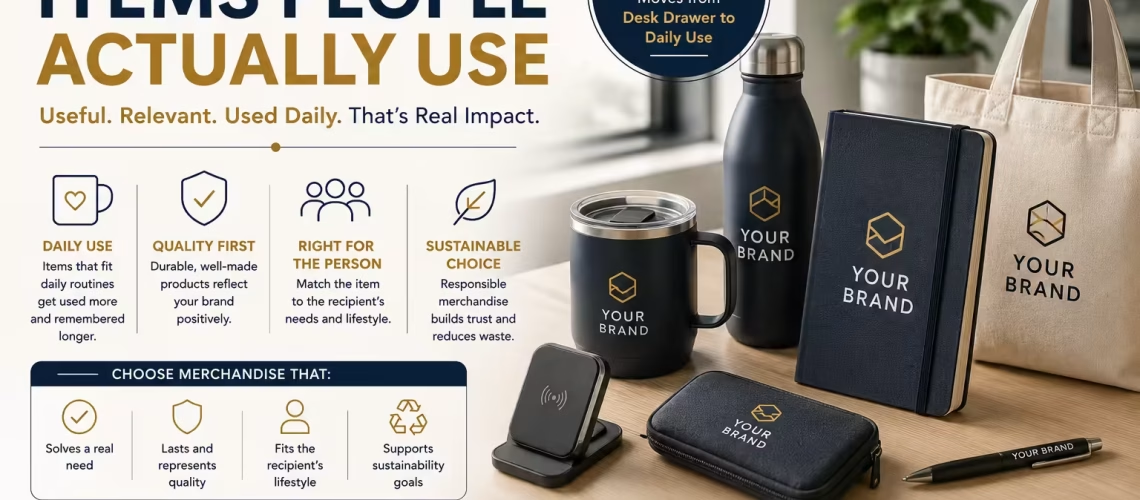
If it’s not something people reach out for without hesitation, then it’s not a brand touchpoint. People use them; there’s a reason to, and that is why they end up outperforming novelty items all the time. That’s something around which MeowPrint Corporate Gifts is based. The real question is not “what can we brand,” it’s “what are our team using every day and how are we putting our brand on that?”
What Does Unused Merchandise Really Cost a Company?
When product is unused, there are a number of silent losses that happen:
- Budget waste: Expenditure on items not removed from a storeroom
- Brand dilution: A logo placed in a drawer will not make any impression whatsoever.
- Sustainability issues: Companies are now held responsible for waste from discarded branded items, which is increasingly a matter of sustainability concern.
What Separates Merchandise That Gets Used From Merchandise That Gets Forgotten?
In most cases, this is not really about cost; this is about how it is integrated into the person’s routine and expectations. An item is likely to be deposited in one of three piles.
Function Over Novelty
New items gain a bit of attention and then quickly get forgotten. If the mug, notebook, or charging cable meets a true, persistent need, or does something that’s not clever, per se, then it will get reused.
Quality People Trust
If something breaks, fades, or peels after the first couple of uses, that’s a reflection on the brand that is printed on it. Investing in durable materials and making for a clean, long-lasting print is more important than a lot of businesses can afford.
Relevance to the Recipient
A gift that works for the warehouse won’t translate the same with client-facing employees. It’s an additional step too many orders forget to do, and it is the easiest way to match the item to the person who will use it.
How Should You Choose Merchandise by Recipient Type?
Not everything that is premium for one client is advisable for another client’s employee, especially the remote one. Most of the return on merchandise investment is won or lost by adjusting the format to the recipient.
| Recipient | What Tends to Work | What Tends to Fail |
| New employees | Welcome kits with drinkware, notebooks | Generic single-item swag |
| Clients | Premium drinkware, tech accessories | Low-cost novelty items |
| Event attendees | Bags, lanyards, apparel | Bulky or fragile items |
| Desk accessories, apparel | Items requiring office use |
What Should You Check Before Placing a Merchandise Order?
When ordering merchandise, do three checks before you place an order:
- Would I personally keep and use this at my desk or in my bag?
- Does it hold up to daily wear without the branding fading first?
- Does the item match the lifestyle of the person receiving it?
If an item doesn’t pass one of these tests, it will probably go into a drawer, not a desk.
When Is the Right Moment to Hand Out Corporate Merchandise?
The right gift at the right time will still fall flat if given at the wrong time, but it will fulfill a purpose when given at the right time.
| Moment | Why It Works | Good Item Fit |
| New hire onboarding | Sets tone from day one, gets daily use immediately | Drinkware, notebooks, desk items |
| Client contract renewal | Reinforces relationship at a decision point | Premium drinkware, tech accessories |
| Company milestones/anniversaries | Creates emotional relevance, not just utility | Apparel, keepsake items |
| Live events/conferences | In-person handoff adds attention generic drops don’t | Bags, lanyards, apparel |
How Does Sustainability Fit Into Merchandise Selection?
Durability and environmental impact tend to go hand-in-hand, leading businesses to consider “will this get used” and “is this responsibly made” the same question.
Longevity Reduces Waste
Merchandise built to last simply gets thrown away less often, which makes durability itself a form of sustainability, not just a quality metric.
Material Choices Are Now a Baseline Expectation
Going green is no longer the exception. Both employees and customers are now increasingly demanding responsibly sourced products, rather than paying more for a premium.
Conclusion
Corporate swag is as effective as it is useful when the gift is selected with the thoughtfulness it deserves and is perfectly suited to the recipient, durable, and serves a function beyond the business environment. All this depends on the production partner company: whether it’s custom apparel printing or regular drinkware and tech accessories, the quality of their work will determine the success or failure. This is a new approach to thinking about merchandise; it’s all about earning its place.
Guest writer