
For years, HR technology has evolved around people who spend their day behind a computer. Yet most organisations rely on a workforce that rarely sits at a desk.
Deskless employees, including security personnel, retail staff, healthcare workers, manufacturing teams, hospitality employees and field service workers, make up around 80% of the global workforce. Despite this, many of the systems designed to engage, communicate with and support employees still assume everyone has constant access to email, intranets and desktop software.
According to Simon Ellis from Jem, this disconnect is creating unnecessary barriers for organisations that want to improve engagement, productivity and retention.
For CHROs, it presents an opportunity to rethink how employee experience is designed.
The biggest mistake HR keeps making
Many HR initiatives begin with good intentions but fail because they are built around assumptions rather than reality.
A security guard working a 12-hour shift, a retail assistant serving customers or a waste picker sorting recyclables does not interact with technology in the same way as an office-based employee. They may have limited access to their phones during working hours, spend hours commuting, and have little opportunity to log into traditional HR systems.
When organisations expect these employees to engage through platforms designed for knowledge workers, participation naturally suffers.
The solution is surprisingly simple. Before introducing new technology or policies, leaders should spend time understanding what a typical working day actually looks like for the people they are trying to support.
Experience the job before redesigning it
One of the most practical recommendations for senior leaders is to step into the shoes of their employees.
Rather than relying solely on surveys or reports, spend a day doing the work.
Travel the same commute. Work the same shift. Experience the same operational challenges.
This level of immersion often uncovers problems that never appear on executive dashboards. It also changes the quality of decision-making because leaders begin designing solutions based on lived experience instead of assumptions.
Empathy is no longer simply a leadership quality. It has become a competitive advantage.
Communication only works if employees can access it
Many organisations invest heavily in communication platforms that deskless employees rarely use.
The question should not be, “Which platform do we want employees to use?”
Instead, ask, “Which platform are employees already using every day?”
For many organisations, the answer is WhatsApp.
Rather than expecting frontline employees to download multiple apps or remember new passwords, successful employers are meeting employees where they already are. This dramatically improves access to company updates, payslips, shift information and learning opportunities.
The easier it is to access information, the more likely employees are to engage with it.
Belonging is built through stories
Deskless employees often feel disconnected from head office and the broader organisational culture.
That disconnect is not inevitable.
One organisation highlighted by Ellis uses WhatsApp to share stories of employees who have progressed from entry-level roles into management positions. Those stories give colleagues across the country visible proof that career progression is possible.
Recognition, shared success stories and regular communication help employees see themselves as part of something bigger than their daily tasks.
When people understand the impact of their work and can see opportunities for growth, engagement naturally improves.
AI should solve today’s problems first
Artificial intelligence dominates HR conversations, but Ellis believes many organisations are trying to sprint before they can walk.
Before implementing AI solutions, employers should first ensure they can communicate effectively with their workforce and manage core HR processes efficiently.
Once those foundations are in place, AI becomes significantly more valuable.
Rather than replacing deskless workers, AI is more likely to reduce administrative work for HR and operations teams. Tasks such as responding to routine employee queries, processing information and supporting managers can increasingly be automated, allowing HR professionals to spend more time on strategic work.
Technology should simplify work, not create additional complexity.
Retention starts with utility
Organisations often focus on engagement campaigns while overlooking a more basic question.
Does the technology employees receive actually help them do their jobs?
Ellis believes two principles should guide every HR technology decision:
Utility means providing employees with information they genuinely need, such as payslips, rosters, benefits, announcements and work schedules.
Accessibility means delivering that information through channels employees already use and trust.
When technology is both useful and easy to access, adoption improves naturally. Better adoption leads to stronger engagement, better communication and ultimately higher retention.
One question every CHRO should ask
Perhaps the most powerful question emerging from the discussion is also the simplest.
Do you truly understand what your deskless employees experience every day?
Many strategic decisions are made from meeting rooms far removed from the operational realities of frontline work.
As organisations continue investing in employee experience, digital transformation and workforce technology, the leaders who succeed will be those who begin with understanding before implementation.
For HR, designing a better employee experience may not start with buying new software. It may start by leaving the office.
About the expert
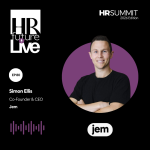
Simon Ellis is Co-Founder and CEO of Jem, a South African HR technology company focused on connecting, managing and supporting deskless workforces. Jem helps organisations engage employees through accessible digital technology, enabling better communication, workforce management and employee experiences at scale.
Join Jem at the HR Summit 2026, where they’ll be sharing practical strategies on how to connect, manage and reward your deskless teams. If you’re looking for actionable insights that you can take back to your organisation immediately, this is a session not to miss. To register, visit www.hrsummit.co.za.