Today, Human Resources (HR) teams do much more than paperwork and compliance. Many HR groups now act as a key partner in the business. They hire people, support employees, and carefully shape workplace culture. The real question is not whether HR can use technology to improve results, but how to use it to work smarter and cut busywork. The best way is to use modern HR software and smart systems that simplify steps, reduce admin work, and build a better experience for employees.
When HR teams pick and use the right tools, they can improve how they work, raise productivity, and create better experiences for both candidates and employees across the whole hiring and employment journey. This shift helps HR spend less time on repeat manual tasks and more time on higher-value work that supports business growth and a strong “people-first” culture.
As HR relies more on digital systems, strong and secure cloud storage also becomes very important to protect private employee data and meet changing rules.
What Is HR Technology and Why Does It Matter for Team Performance?
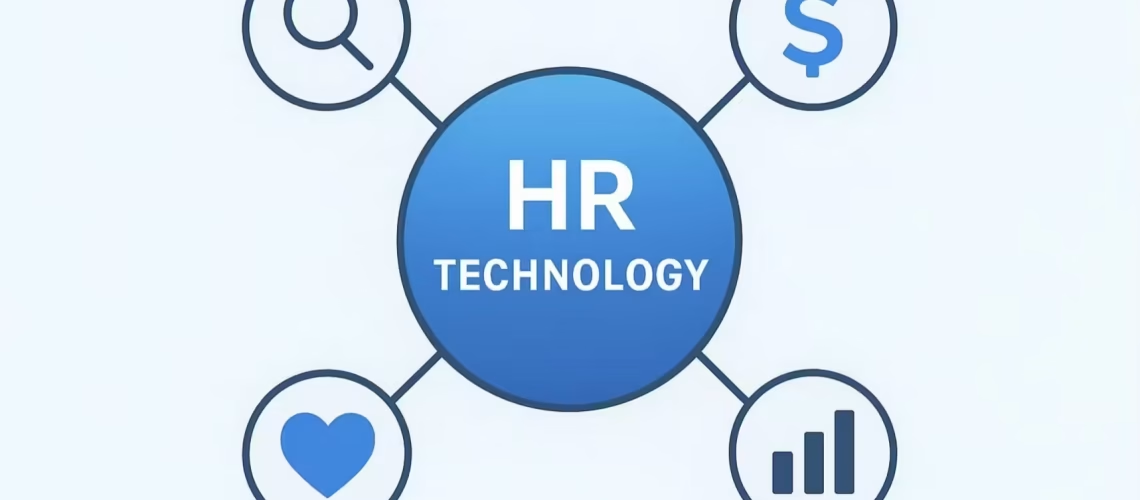
HR technology (often called HR Tech) is a group of tools and software that helps HR teams run key tasks faster and with fewer errors. These tools can support many steps in the employee journey, from opening a job request to scheduling interviews and sending an offer. Many HR systems include automation for routine work, artificial intelligence (AI) for insights, and analytics that support data-based decisions.
The main goal of HR technology is to reduce admin work, improve talent management, and support better decisions-so HR can spend more time working with people. This matters because it moves HR away from constant data entry and paperwork and frees time for employee well-being, culture building, and growth.
Without technology, HR can get stuck doing manual work that takes too long and is hard to improve.
Definition and Key Components of HR Technology
HR technology is a set of connected tools that helps HR run daily work more smoothly. It uses automation and smart features to create simple processes and support modern workforce management. These systems reduce repeat tasks so HR staff can use their time on bigger goals that support the business and employee satisfaction.
HR tools have grown a lot over time and now cover everything from hiring to full employee management, aiming to make each stage of employment easier for everyone.
Importance of Technology in Improving HR Functions
HR technology is more than a “nice to have.” It helps organizations of any size manage growing teams and more complex needs with better speed and consistency. It also helps HR shift from an admin-only role to one that supports employees and drives change.
With technology, HR can support development, increase engagement, and respond faster to employee needs. It also helps reduce risk, save time, and stay compliant with changing labor laws and rules, so HR can focus on higher-level work.
Common Types of HR Software and Tools
There are many HR tools, and each one focuses on a different area. Examples include:
- HRIS (Human Resource Information Systems) like Workday, Employee Navigator, or BambooHR for employee data, performance reviews, and payroll
- Recruiting tools like Greenhouse, Lever, and LinkedIn Recruiter for sourcing and applicant tracking
- Employee engagement tools like Culture Amp and Officevibe for feedback and satisfaction tracking
- Learning & Development platforms like LinkedIn Learning and training options inside tools like Mineral to support skill growth at scale
Key Benefits of Adopting HR Technology for Teams
Using HR technology can improve team performance and overall business results in many ways. The benefits go beyond speed and convenience. They also support better hiring, stronger engagement, and clearer links between pay, performance, and feedback.
With the right tools, HR teams can become more flexible, more data-focused, and more effective.

Improving Efficiency and Reducing Manual Work
A clear benefit of HR technology is automation of repeat admin tasks. Payroll, scheduling, and benefits work can take up a lot of time, but software can handle these tasks faster and with fewer mistakes. That gives HR more time to focus on things like succession planning, helping leaders plan for future hiring needs, and supporting employees more directly. The time saved can be large, and it helps HR handle harder problems while improving overall productivity.
Improving Hiring Accuracy and Candidate Experience
Hiring is a high-impact HR responsibility, and technology can make it faster and more accurate. AI-based sourcing, resume screening, and applicant tracking systems (ATS) help teams find and move forward with the right candidates sooner. These tools also reduce mistakes that often happen with manual entry and calculations.
This careful approach supports better insights, such as a “Fit Score,” and helps build stronger talent pools. By simplifying the full candidate journey-from application to onboarding-HR can create a smooth experience, which helps attract strong candidates who may only be available for a short time.
Boosting Employee Engagement and Productivity
Engagement is a big part of a healthy workplace, and HR technology offers practical ways to support it. With better communication and feedback tools, HR can run pulse surveys, recognition programs, and messaging tools that help employees feel connected and appreciated.
Real-time data from these tools helps track engagement and spot issues early, so HR can adjust onboarding, development, and culture efforts before problems grow. Gallup reports that highly engaged workforces outperform others, including 147% higher earnings per share, showing a clear link between engagement and performance.
Aligning Compensation, Feedback, and Performance
Fair and clear pay and performance practices support retention and morale. HR teams can use technology to combine business data with people data like retention, promotions, market surveys, benefit use, and diversity data. This helps align bonuses, raises, and performance feedback with the company’s goals and supports fairness.
Analytics can also support pay reviews, benefits use checks, engagement survey results, and demographic reviews. This helps HR make better decisions about benefits and salary ranges, which can lead to a more motivated workforce.
How Technology Transforms Core HR Processes
Technology changes core HR processes from manual and reactive to more automated and proactive. This is not just about speed. It also improves accuracy, consistency, and the value HR brings to the business. Major steps like onboarding and learning can run better with the right tools, helping HR become more effective.
Automating Administrative and Compliance Tasks
HR technology can automate many admin and compliance duties. In the past, HR teams spent many hours on paperwork, data entry, and keeping up with changing labor laws. Tools like Mineral can act as a compliance support system with expert guidance, policy templates, and a library of resources that reduce risk and save time.
With more automation, HR spends less time tracking rules manually and more time supporting employees and planning ahead.
Streamlining Talent Acquisition and Recruitment
Hiring becomes much smoother with HR technology. An ATS can automate job postings and track applicants, which helps a lot for organizations that get many applications. Candidate Relationship Management (CRM) tools help HR keep in touch with candidates, improving the candidate experience-especially in competitive fields.
AI scheduling tools can also handle interview scheduling, cutting admin work during busy hiring periods. Real-time labor market data on hiring and job openings also helps HR adjust plans and stay competitive, so teams can address talent gaps earlier.
Enabling Effective Onboarding
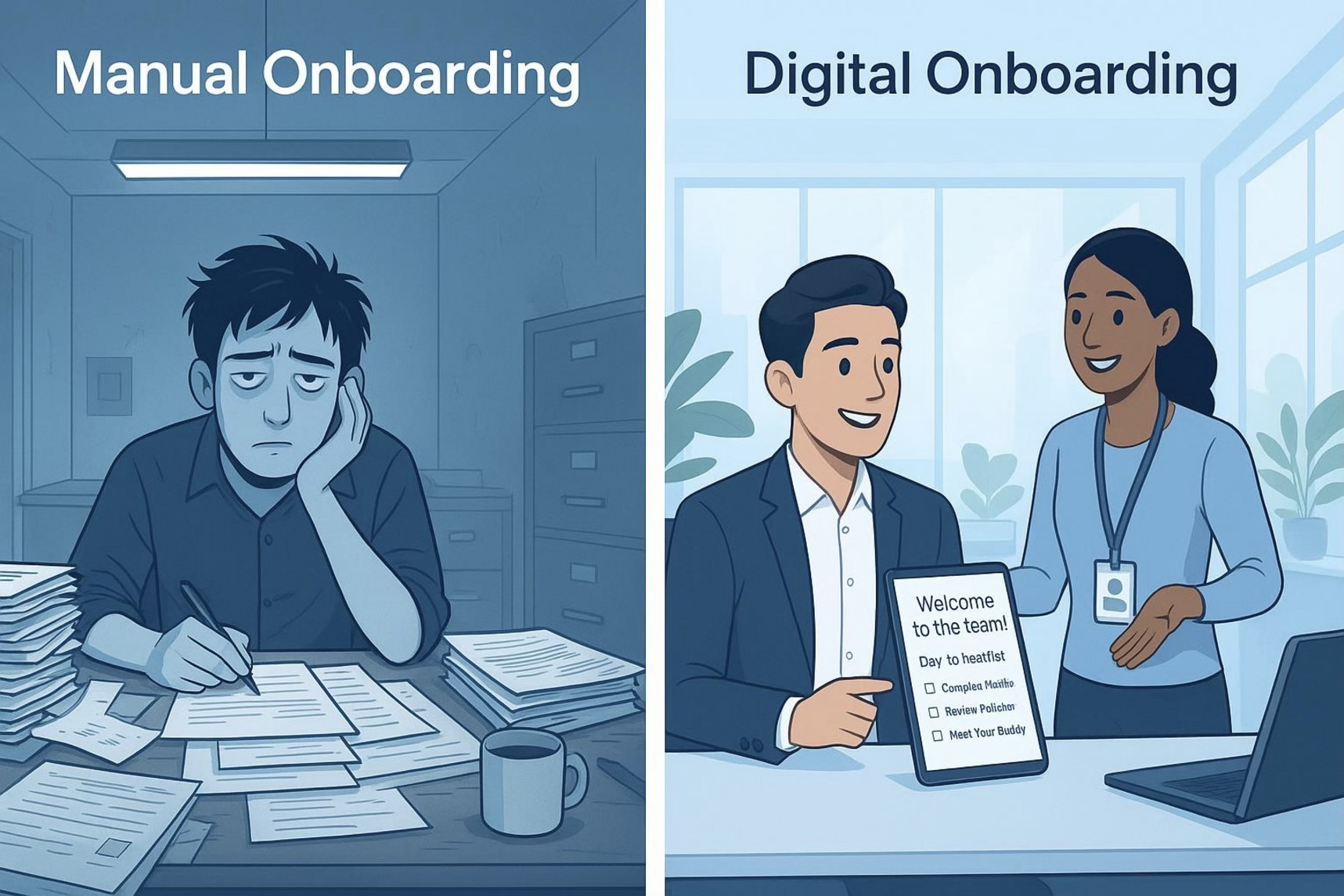
Onboarding shapes how a new employee feels from day one. Manual onboarding can feel confusing and overwhelming. Tech-based onboarding can send forms and key info in one digital package, reduce mistakes, and make the process more welcoming.
This gives HR more time for the human side of onboarding, like introductions and helping people settle into the culture. Better onboarding often leads to stronger early engagement and higher retention.
Facilitating Benefits Administration
Benefits can be one of the most time-heavy parts of HR. Enrollment, ACA reporting, and ongoing compliance require accuracy. Platforms like Employee Navigator make benefits easier by giving employees a place to enroll online, while HR can manage reporting and compliance in one system. This improves the employee experience and cuts HR admin work, which can also improve accuracy.
Supporting Learning and Development
Ongoing learning helps keep employees skilled and ready for change. HR technology supports this through tools like Learning Management Systems (LMS), which can offer learning paths and development options that match both employee goals and company needs.
Many training tools also track progress, giving HR and managers a real-time view of how people are doing. This makes it easier to support employees who need help and recognize those doing well.
Digital learning platforms, mentoring software, and skill tracking tools also help employees take more control of their growth, while HR can spot skills gaps and measure results.
Leveraging Data and Analytics to Drive HR Performance
In modern HR, data is extremely valuable. Collecting and using workforce data is now a basic need for strong HR performance. Analytics helps HR move from reacting to problems to spotting trends early, lowering risk, and making better decisions.
Collecting and Analyzing Employee Feedback
Many modern HR programs start with employee feedback data. AI and data tools can help analyze “voice of employee” feedback faster. Tools like Culture Amp and Officevibe offer real-time feedback, so HR can gather insights on an ongoing basis. Faster analysis means HR can act on feedback sooner and fix issues more quickly. This steady feedback loop helps HR understand employee mood, find areas to improve, and support a workplace culture that listens and responds.
Using Data to Benchmark Workforce Skills
To manage talent well, HR needs a clear view of employee skills. Skill inventory and benchmarking are two useful ways to use data. By tracking skills, organizations can spot gaps, measure training impact, and make better staffing decisions.
Experts like Neil Morelli from Codility have highlighted this type of approach as a way to make sure the business has the skills it needs now and in the future.
Identifying and Closing Skills Gaps
Real-time data helps HR find and address skills gaps early. By tracking skills and comparing them with business needs, HR can see where training is needed most. Employee Relationship Management (ERM) systems can provide visibility into skills and help managers build teams through focused upskilling and reskilling. This helps teams stay flexible in a fast-moving market and turns skill gaps into growth opportunities.
Predicting Workforce Trends and Retention Risks
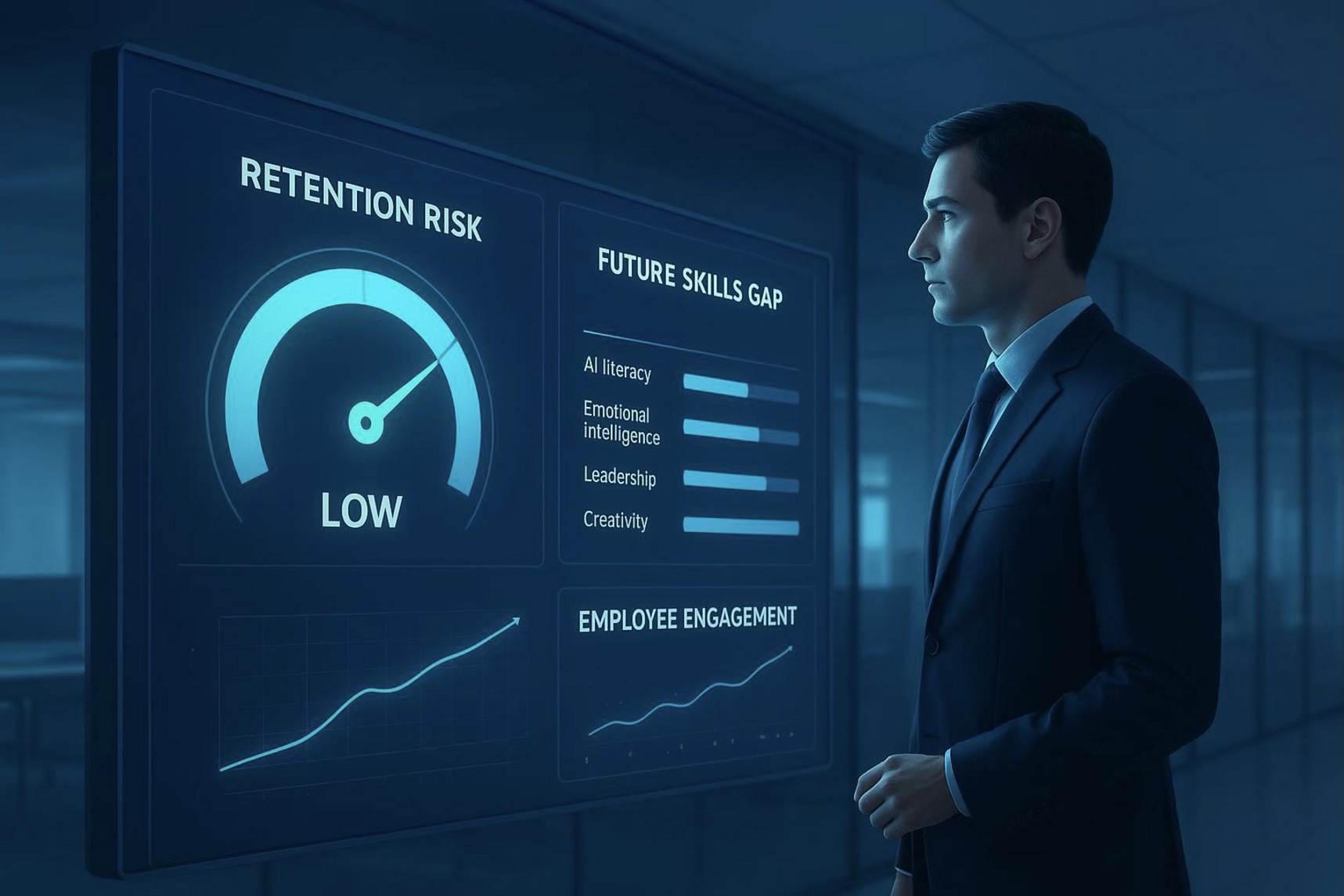
People analytics helps HR understand and predict trends like engagement changes and retention risk. It can measure engagement, flag flight risk, review sales productivity, and support workforce planning.
With generative AI, predictive HR analytics is getting more advanced. With enough data from surveys, talent tools, and performance reviews, AI can help predict which employees are most likely to leave. This gives organizations time to step in with retention plans, as noted by experts like Dr. Timothy J. Giardino and Nancy Adams. Exit survey analysis can also show patterns behind departures, helping improve retention and hiring plans.
Improving Decision-Making with People Analytics
An HR analytics platform helps teams use technology and data together. It pulls data from across the company to spot patterns and plan for future needs. With this, HR can improve hiring, support performance, and improve employee satisfaction.
Building strong skills in data collection and insights helps teams focus on real issues instead of guessing. The right tools support data-based decisions across hiring, development, and retention, as emphasized by Amy Cappellanti-Wolf from Dayforce.
How to Choose and Implement the Right HR Technology
Choosing and rolling out HR technology is a strategic project. It is not just about buying the newest tool. It is about picking software that matches real needs, connects well with current systems, and is adopted by employees. A clear plan helps the company get strong value from the investment and improves HR performance.
Identifying Business Needs and Objectives
The first step is to define the business needs and goals. What problem are you trying to fix? Examples include speeding up hiring, improving engagement, simplifying performance management, or improving compliance. Clear pain points help you find tools with the right features. Without clear goals, even advanced software can disappoint. This step makes sure technology is used for a reason, not just because it is available.
Evaluating User-Friendly Interfaces and Accessibility
After you know your needs, focus on ease of use. HR software should be simple for HR staff and employees. A clear interface improves adoption and reduces training time. If a system is hard to use, people may avoid it, limiting its value. Accessibility matters too, so employees with different skill levels and in different locations can use the platform without issues.
Assessing Scalability and Integration Capabilities
Good HR software should scale as the company grows and hiring needs increase, without slowing down. It should also connect well with existing tools, such as payroll systems, ERP platforms, and other HR software. Strong integration keeps data consistent and reduces manual entry across systems. It also helps avoid “point solutions” that create data silos and make reporting and workflows harder.
Focusing on Analytics, Reporting, and Customization
If you want better decisions from data, the system needs strong reporting and analytics. These features help HR track key metrics and act faster. Look for tools that capture hiring data and help hiring managers, interviewers, and recruiters plan and run structured interviews together. Custom reports and dashboards are also helpful so each team sees the data that matters most. Advanced analytics can turn raw numbers into clear recommendations that improve results across the company.
Engaging Stakeholders in Selection and Rollout
Adoption depends on the people using the tool. Involve key stakeholders-leaders and end users-during selection and rollout. This builds support early, brings up concerns sooner, and helps confirm the tool meets different needs. Training should fit different user groups and explain how the system makes work easier. A clear rollout plan and ongoing support help drive adoption and long-term success.
Addressing Challenges and Risks in HR Digital Transformation
HR technology brings many benefits, but the shift can have problems too. Companies need to plan for risks to avoid setbacks. Common issues include data quality, tools that do not work well together, and poor planning during adoption.
Ensuring Security and Compliance with HR Data
HR systems store private employee data, so security and compliance must be a top focus. Organizations should choose tools with strong data protection and support for labor laws, workplace rules, and reporting needs. Data privacy rules also change over time, so it helps to work with vendors that build security and compliance into their products. Poor security or compliance can lead to major legal and financial costs, and it can damage trust with employees.
Overcoming Integration Issues Across Solutions
A common problem comes from using many separate tools that each handle one HR job. These tools can work well alone, but connecting them can be hard.
- Data can get split across systems, making it difficult to get one clear view of employee metrics.
- Costs can also rise due to multiple subscriptions, integration work, and maintenance.
- Training can become harder because employees must learn many systems.
- Workflows can also slow down when people jump between tools.
Many organizations do better with end-to-end solutions that can cover the full talent lifecycle in one platform and reduce data and process gaps.
Avoiding Common Pitfalls in HR Tech Adoption
Beyond security and integration, there are other common mistakes. One is buying technology without clear business needs, which leads to tools that do not solve real problems. Another is ignoring ease of use, which can lead to low adoption and pushback.
Poor data quality and weak data rules can also ruin analytics results. Not involving key stakeholders can also cause low buy-in and project failure. A people-first plan, strong preparation, and ongoing review help avoid these problems.
Maximizing the Human Side of HR Tech
The biggest value of HR technology is not replacing human contact-it supports it. Strong organizations use technology to give HR more time to focus on people. This means keeping a people-first mindset, matching tools to culture, and using technology to build trust and clarity.
Maintaining a People-First Approach
HR technology should support people, not replace them. A “people-first” approach puts employee well-being, growth, and engagement at the center. Technology gives HR tools to drive real change and move from admin work to employee support. This can include smoother onboarding, tools for managers to support and recognize teams, and engagement platforms that help people feel connected. The goal is a workplace where employees feel supported, engaged, and valued.
Aligning Technology with Organizational Culture
HR tools work best when they fit the company’s culture. Technology can support company values through real-time feedback, recognition, and surveys that help employees feel heard. If a company focuses on development, learning platforms and skill tracking tools can support growth.
If flexibility matters, communication and collaboration tools can support work across locations. When technology supports the culture the company wants, it can help build a stronger workplace.
Promoting Trust and Transparency through Tech
Technology can also support trust and transparency. Clear systems for sharing information, giving feedback, and managing performance help reduce confusion and support open communication. For example, compensation analytics and people metrics can support fair bonuses and raises, building trust in HR processes.
Feedback platforms and sentiment tools can show what employees need, helping HR adjust policies and show the company listens. This openness can build psychological safety and support a culture of respect.
Emerging Trends and the Future of HR Technology
HR technology keeps changing as new tools and trends shape how companies hire, retain, and develop people. These changes match new workplace needs, where digital tools are now a key part of long-term success.
AI and Automation in HR Workflows
AI and automation are expected to change HR work even more. Generative AI (GenAI) is growing and giving talent teams new ways to offload tasks and save time. AI can now run multiple Large Language Models (LLMs) at once and act like an always-available assistant. It can help find insights, identify candidates, and support engagement.
AI-based predictive analytics can use data from surveys, talent tools, and performance reviews to predict who may leave, giving HR time to step in and improve retention. This leaves HR more time for high-value people work.
Personalization of Employee Experience
HR technology is also moving toward more personalized employee experiences. Just like customers want personalized services, employees want career paths, learning options, and communication that fits them.
ERM systems help by supporting regular feedback, recognizing individual achievements, and offering learning that matches both personal goals and business needs. This personal approach, powered by AI and analytics, can lead to higher satisfaction, stronger engagement, and better retention.
Continuous Feedback and Real-Time Monitoring
Many organizations are shifting from annual reviews to ongoing feedback and real-time tracking. When analytics connects with employee experience platforms, HR can gather feedback in real time, track engagement, and spot issues early. This helps HR adjust onboarding, development, and culture work sooner. Tools that give quick insight into sentiment and performance help managers coach and recognize employees at the right time. This ongoing feedback cycle supports strong, flexible teams in fast-moving business environments.
Conclusion
Digital change in HR is more than a software update. It changes how companies support and manage their most valuable asset: their people. As work becomes more competitive and harder to manage, HR technology will keep improving and bringing new tools and insights. The focus will stay on connected HR systems that work across the full talent lifecycle-from finding and engaging candidates to supporting employees for long-term growth.
Companies that adopt these tools early, and move away from scattered point solutions to connected AI-supported platforms, will be in a stronger position to link workforce plans to business goals. This helps maintain a competitive edge, improves employee satisfaction, and supports a healthy culture. The future of HR will be data-based, people-focused, and supported by technology-and teams that lead this shift can build workplaces where employees feel empowered, engaged, and valued.
Guest writer