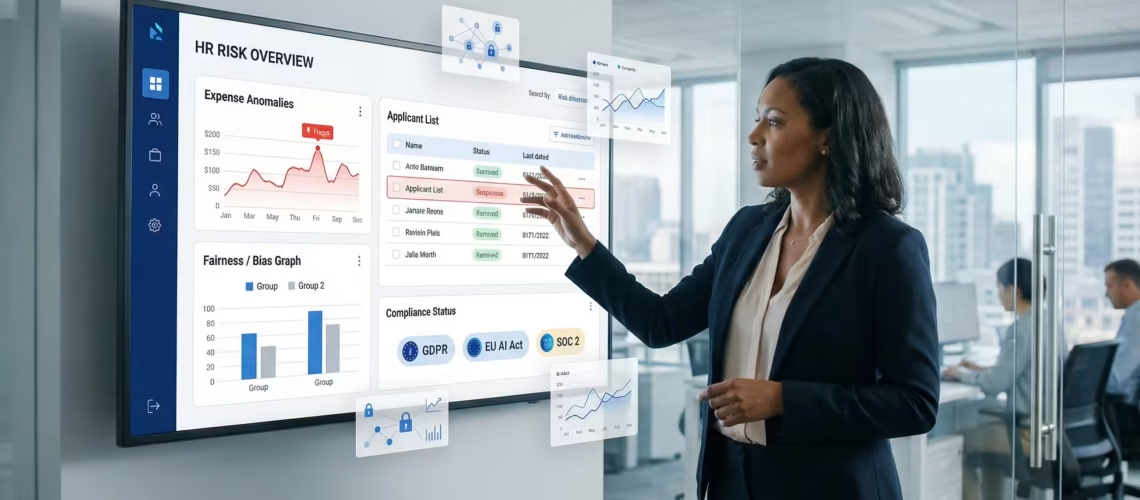
HR risk has outgrown simple payroll errors and the occasional harassment claim. Today you juggle algorithmic bias, insider fraud, deep-fake applicants, and tightening data-privacy laws—all at once.
AI can amplify or contain those threats. A July 2025 survey found that 65 percent of U.S. managers already use AI at work, and 94 percent let it influence promotion or layoff decisions—putting HR on the legal hook when models misfire.
This guide reviews nine AI HR risk-management tools that spot trouble early, document every safeguard for auditors, and plug into the systems you already use—helping you turn risk into resilience.
Why HR risk management needs AI in 2026
AI now drives decisions once guarded by people. In July 2025, 65 percent of U.S. managers said they use AI at work, and 94 percent let it influence promotions or layoffs, according to a 2025 Compliance Digest overview.
Europe shows the same pattern. According to law firm Davis Wright Tremaine, EU lawmakers estimate that 42 percent of employees are already “managed by algorithms,” and the upcoming AI Act can fine companies up to €15 million (or 3 percent of global revenue) when high-risk HR systems break the rules. With penalties that steep, transparency reports and bias audits move from nice to have to must have.
Threats keep shifting. PwC reports a surge in AI-generated résumés and voice-cloned interviews; one in four firms lost more than $50,000 to fraudulent hires in 2024. Traditional vetting cannot spot synthetic applicants fast enough.
Combine rapid adoption, tougher laws, and sharper fraud schemes, and manual spreadsheets fall short. Your HR team needs AI that flags risk in real time and keeps a clear paper trail for regulators.
According to Logical Commander’s behavioral analytics guide at Logicalcommander.com, the most effective setups combine event logs from endpoints, HR identity attributes such as role or department, and application access records so anomaly detection can turn everyday activity into early warning signals without inspecting private content or relying on secret monitoring.
Those details give you a concrete checklist of data sources and non intrusive controls to look for when you evaluate any AI HR risk platform.
How we ranked the tools
Our rubric mirrors how HR, compliance, and risk teams choose software, so you can copy it for your own vendor short list.
- HR-risk focus (20 points). Products that address payroll fraud, bias audits, or employee-data privacy every day earn full marks. General GRC suites that dabble in HR score lower.
- AI depth (20 points). True machine-learning models that predict issues—such as a spike in harassment claims—rank higher than rules engines dressed up as AI.
- Compliance and security (20 points). We check for ISO 27001, SOC 2, GDPR readiness, and time-stamped audit logs.
- Ease of adoption (15 points). Out-of-the-box integrations and a clean interface shorten rollout time and earn more points.
- Pricing transparency (15 points). Clear tiers or public rate cards beat a “contact sales” message.
- User feedback (10 points). Ratings from G2, Capterra, and similar sites provide the final layer of real-world validation.
Every product starts on the same 100-point canvas; the scores in the next section reflect that math, not vendor marketing.
At-a-glance comparison
Before we dive into each review, here’s a quick matrix of every platform’s niche, signature AI capability, and buying essentials.
| Rank | Tool | Core AI edge | Key HR risks addressed | Compliance badges | Notable integrations | Price snapshot* |
| 1 | Logical Commander | Real-time anomaly detection across HR data | Insider fraud, ethics breaches, workplace-violence signals | ISO 27001, GDPR, EPPA | HRIS, IAM, Slack / Teams | Free trial → enterprise licence |
| 2 | Checkr | AI-standardised criminal-record parsing | Bad hires, credential fraud, deep-fake applicants | FCRA, SOC 2 | Greenhouse, Workable, API | Pay-per-check; volume tiers |
| 3 | Deel | Continuous global-law monitoring and misclassification AI | Contractor status, local-labour compliance | SOC 2 Type II, GDPR | BambooHR, QuickBooks, Workday | $599 per EOR employee |
| 4 | HR Acuity | “Oliver” AI that surfaces case patterns | Harassment, retaliation, case mishandling | SOC 2, GDPR | Workday, SAP, SSO | Annual SaaS by headcount |
| 5 | OneTrust | GenAI assistant for privacy guidance | GDPR / CPRA data violations, vendor risk | ISO 27001, ISO 27701 | Workday, ServiceNow, Okta | Modular; quote based |
| 6 | KnowBe4 HR | Adaptive phishing simulations and risk scoring | Employee cyber mistakes, HIPAA training gaps | ISO 27001, FedRAMP | O365, Gmail, LMS | $15–$30 per user per year |
| 7 | Credo AI | Bias audits and GenAI guardrails | Algorithmic discrimination, AI Act compliance | SOC 2, NIST AI RMF | Databricks, Azure ML, Jira | Enterprise quote |
| 8 | AllVoices | NLP trend analysis in anonymous reports | Culture issues, whistle-blower compliance | SOC 2, GDPR | Slack, Teams, HRIS | Tiered SaaS; free basic plan |
| 9 | Riskonnect | Predictive risk scoring across silos | Global ERM, safety incidents, audit gaps | ISO 27001, SOC 1 and 2 | Workday, Oracle, ServiceNow | Enterprise subscription |
*Prices reflect publicly listed tiers or typical quotes as of Q4 2025; confirm current rates on vendor sites.
Keep this table handy. One glance shows which tool best addresses deep-fake hiring fraud, GDPR audits, or any other pressing risk.
1. Logical Commander – score 92/100
Trusted by organisations in 47 countries, Logical Commander, an enterprise risk-management platform treats HR risk like a live security feed rather than a quarterly checklist. Its AI ingests streams of HR data, from expense claims to Slack messages, and flags patterns a person might miss.
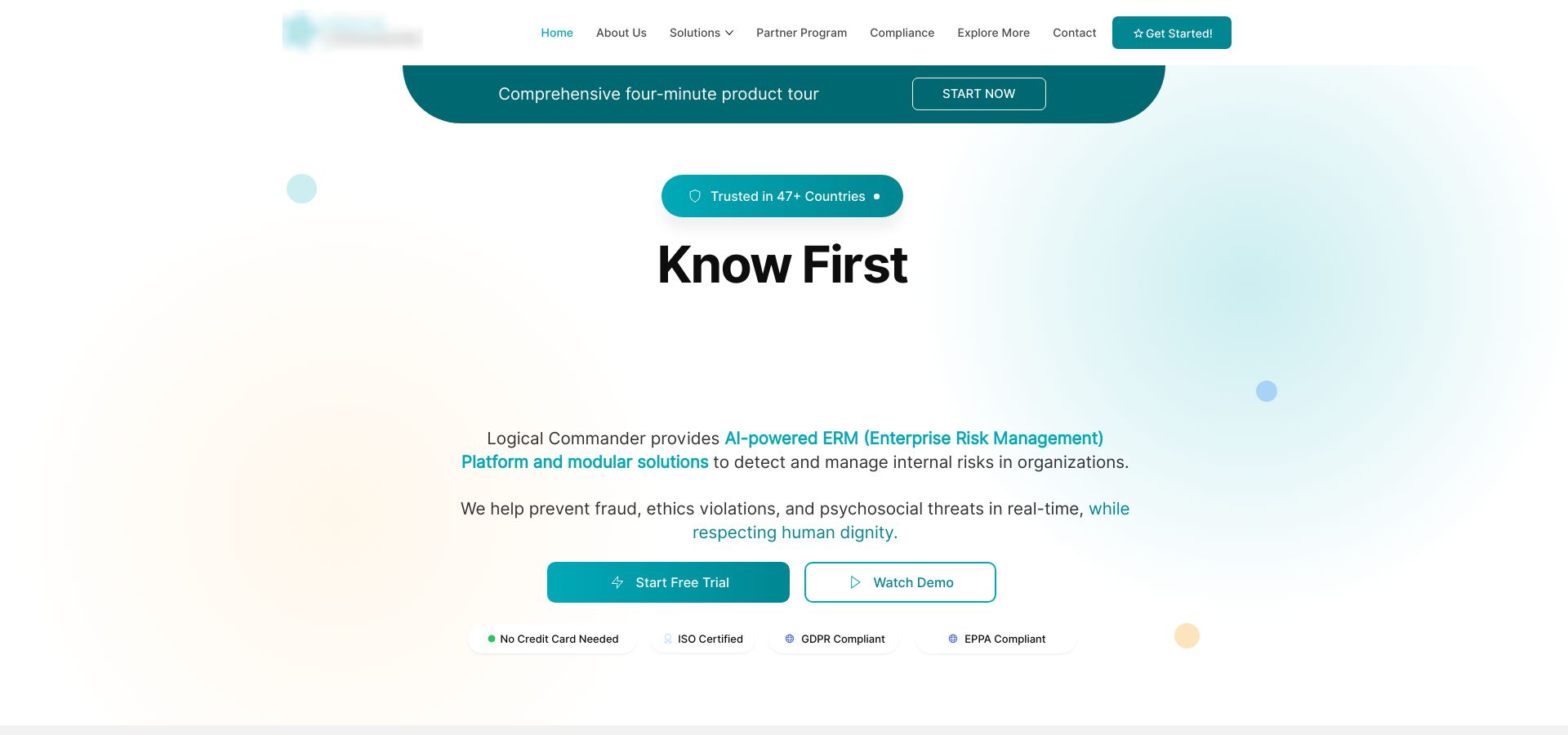
Picture a dashboard that pings you the instant duplicate reimbursements surface or a team’s sentiment drops. Early alerts let HR act before fraud spreads or morale sinks.
Compliance comes baked in. The platform holds ISO 27001 certification and aligns with GDPR and the U.S. Employee Polygraph Protection Act. Every alert carries a time stamp, so auditors can retrace steps without extra work.
Deployment is quick: connectors pull org charts from Workday, identity data from Okta, and even door-badge logs, so most teams go live within weeks. Logical Commander already serves clients in 47 countries, giving it a wider compliance record than many newcomers.
Pricing starts with a free trial and shifts to tiered licences based on headcount and activated modules. Ask for ROI figures specific to your sector during the demo.
Bottom line: if insider risk tops your worry list, Logical Commander offers continuous monitoring, smart triage, and an audit-ready paper trail in one place.
2. Checkr – score 88/100
Checkr turns background checks from a multi-day task into an automated workflow. TechRadar reports that optical character recognition scans court documents, and machine-learning models standardise legal codes across 3,200 U.S. jurisdictions, surfacing a clear, comparable report instead of dense legal jargon. The same engine flags identity mismatches, a growing defence against deep-fake CVs and voice-cloned interviews.
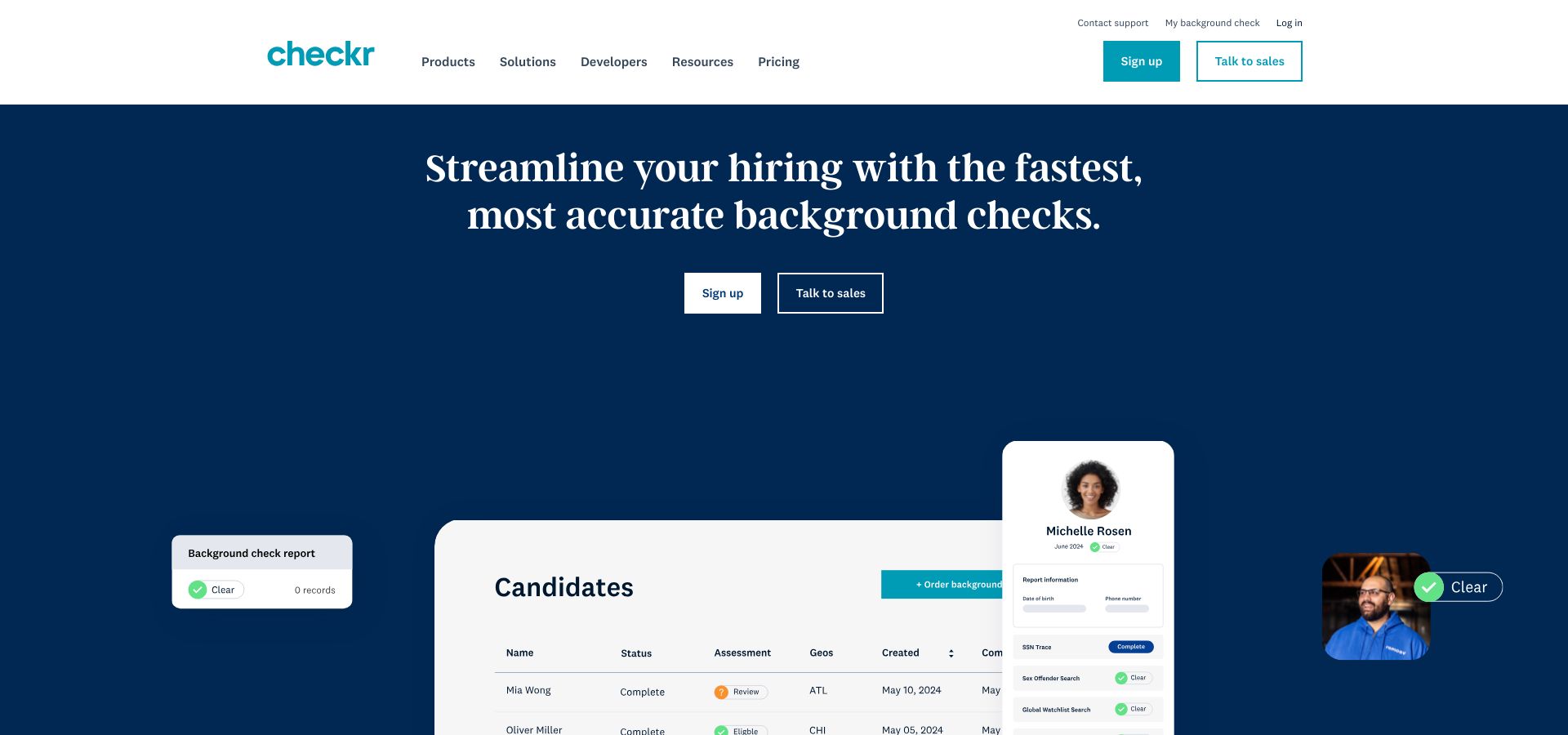
Speed stays in step with compliance. Every screening follows the Fair Credit Reporting Act, offers a built-in dispute workflow, and sits behind SOC 2 controls. A complete audit trail shows exactly when and how data was accessed.
Integrations run wide. Recruiters can launch checks inside Greenhouse, Workable, or any ATS through API, with results flowing back automatically. Pricing is pay per check, starting around $30 for a Basic+ package and falling with volume, according to G2 crowd reviews.
If you need fast, compliant vetting in your hiring funnel, Checkr’s AI engine offers a balanced mix of speed, coverage, and legal defensibility.
3. Deel – score 86/100
Cross-border hiring feels exciting until tax inspectors arrive. Deel’s AI scans labour laws in more than 150 countries and checks your contracts, payroll, and time-off data. If a Brazilian contractor drifts into employee status, you know before regulators do.
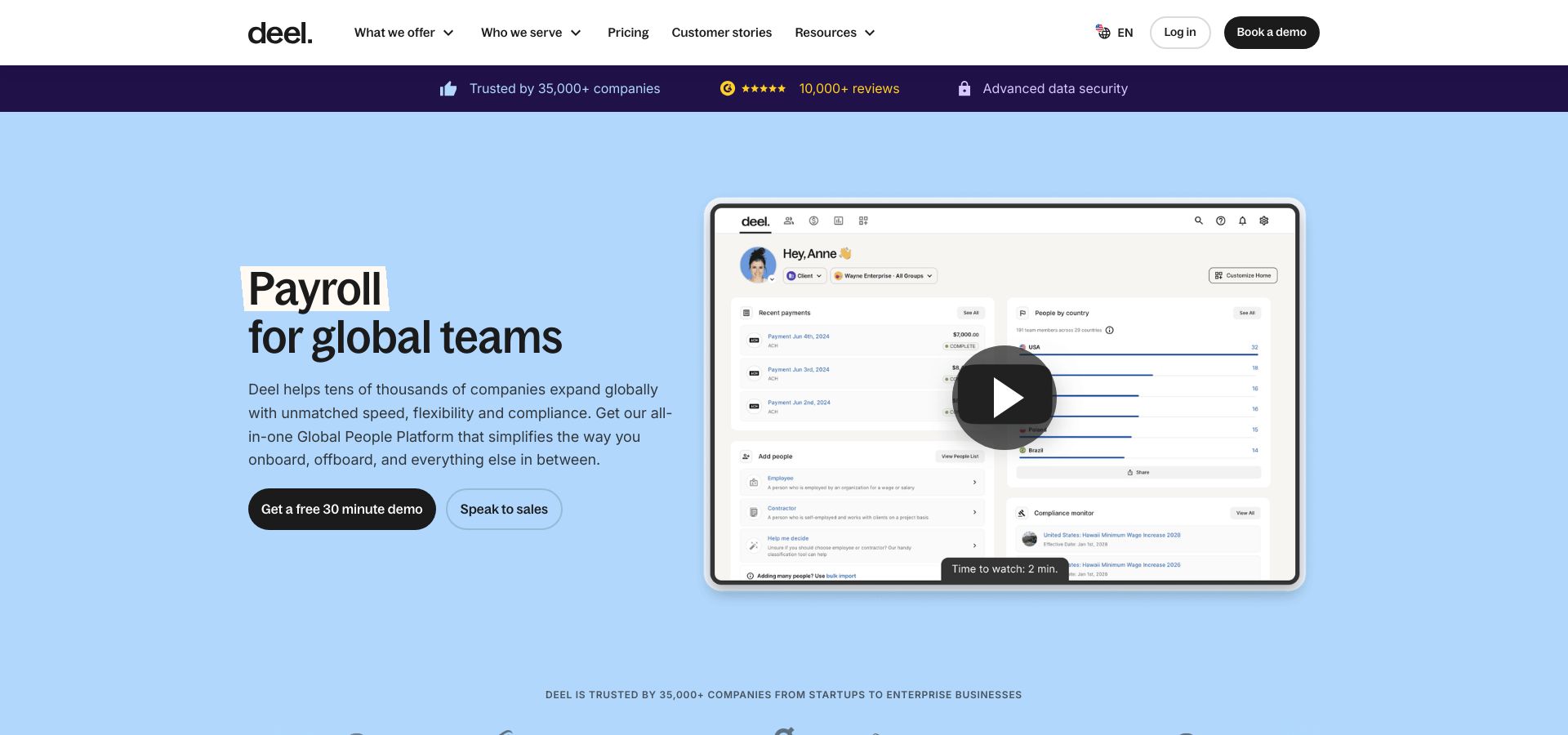
Deel Advisor, an in-platform chatbot, answers questions such as “Can my Canadian designer be overtime-exempt?” in plain English, citing local statutes. The tool can cut days of back-and-forth with outside counsel, according to industry publication People Managing People.
Security stays front and centre. Deel holds SOC 2 Type II certification, encrypts data end-to-end, and lets you set granular, role-based permissions.
Integrations span HRIS, accounting, and ATS tools: Workday for headcount, QuickBooks for payroll journals, and Netsuite for contractor invoices. Pricing is clear—employer-of-record service starts at $599 per employee per month, while contractor management costs $49 per contractor per month.
Bottom line: if international compliance keeps you awake, Deel’s always-on rules and legal guidance lower risk across borders.
4. HR Acuity – score 84/100
Miss one employee-relations case and legal headaches multiply. HR Acuity moves every allegation, performance note, or policy question into a structured workflow; its AI assistant, Oliver, scans that data for spikes, such as a post-reorg jump in retaliation claims or a pattern of micro-aggressions tied to a manager.
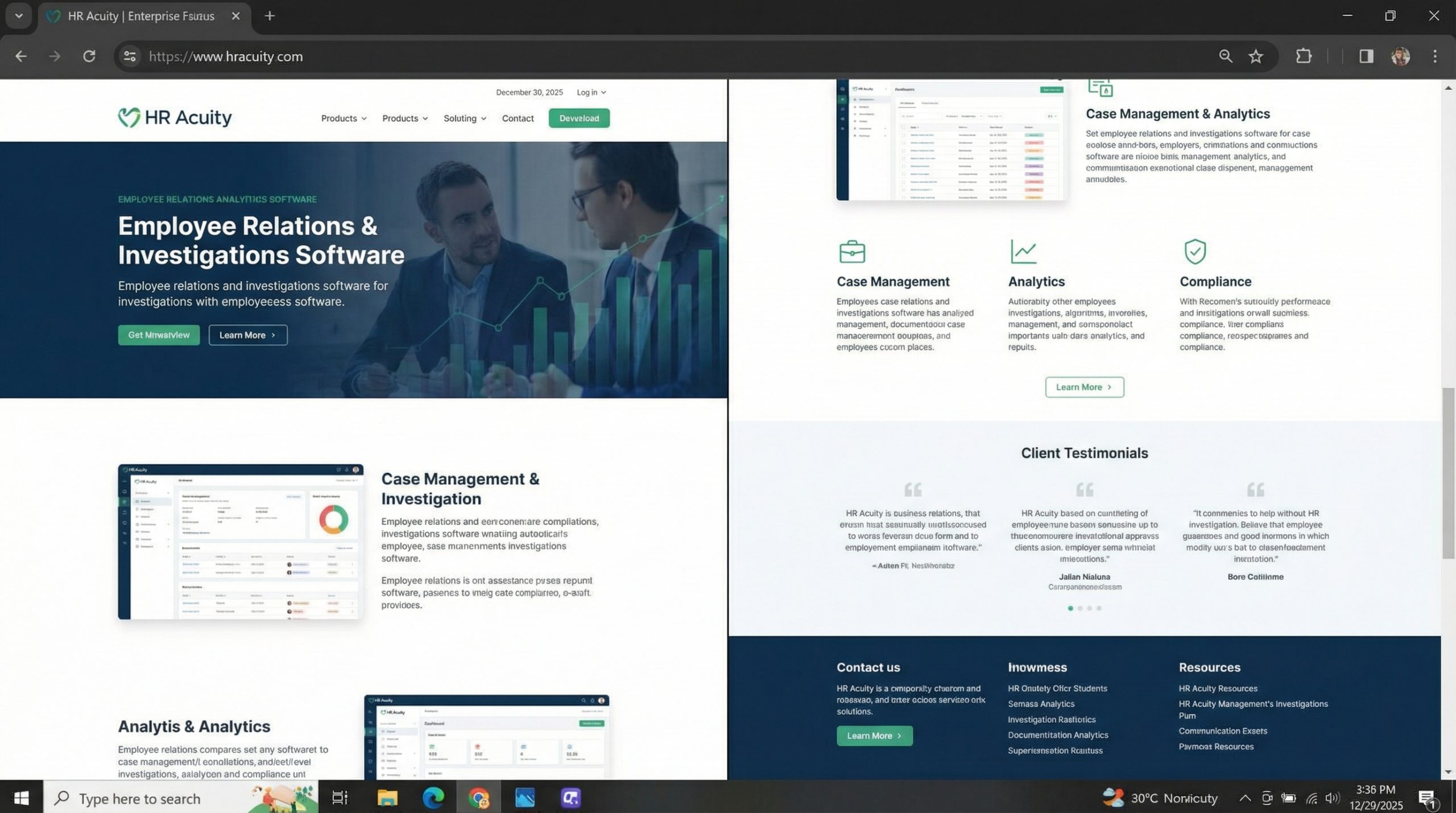
Instead of paging through dozens of files, HR opens a dashboard that flags hotspots and recommends preventive steps like refresher training or leadership coaching. All activity carries a time stamp, so auditors can retrace decisions in minutes rather than days.
The platform holds SOC 2 Type II certification and encrypts evidence end to end, reinforcing chain-of-custody requirements. Workday and SAP feed employee data automatically, while SSO keeps access tight; ethics-hotline or IT-ticket feeds can flow in through connectors.
Pricing follows a quote model, usually an annual SaaS tied to employee count. HR Acuity cites case studies where clients avoided six-figure discrimination costs by catching issues early, so ask the sales team for ROI examples in your sector.
If you need a defensible, AI-guided system of record for employee-relations risk, HR Acuity deserves a spot on your shortlist.
5. OneTrust – score 82/100
Privacy laws change weekly, and OneTrust’s AI assistant tracks those updates so you don’t have to. The platform discovers where employee data lives, maps its flow, and checks each touchpoint against frameworks such as GDPR, CPRA, and HIPAA. Launch a new wellbeing survey? OneTrust reviews the consent language in real time and suggests fixes inside the tools you already use.
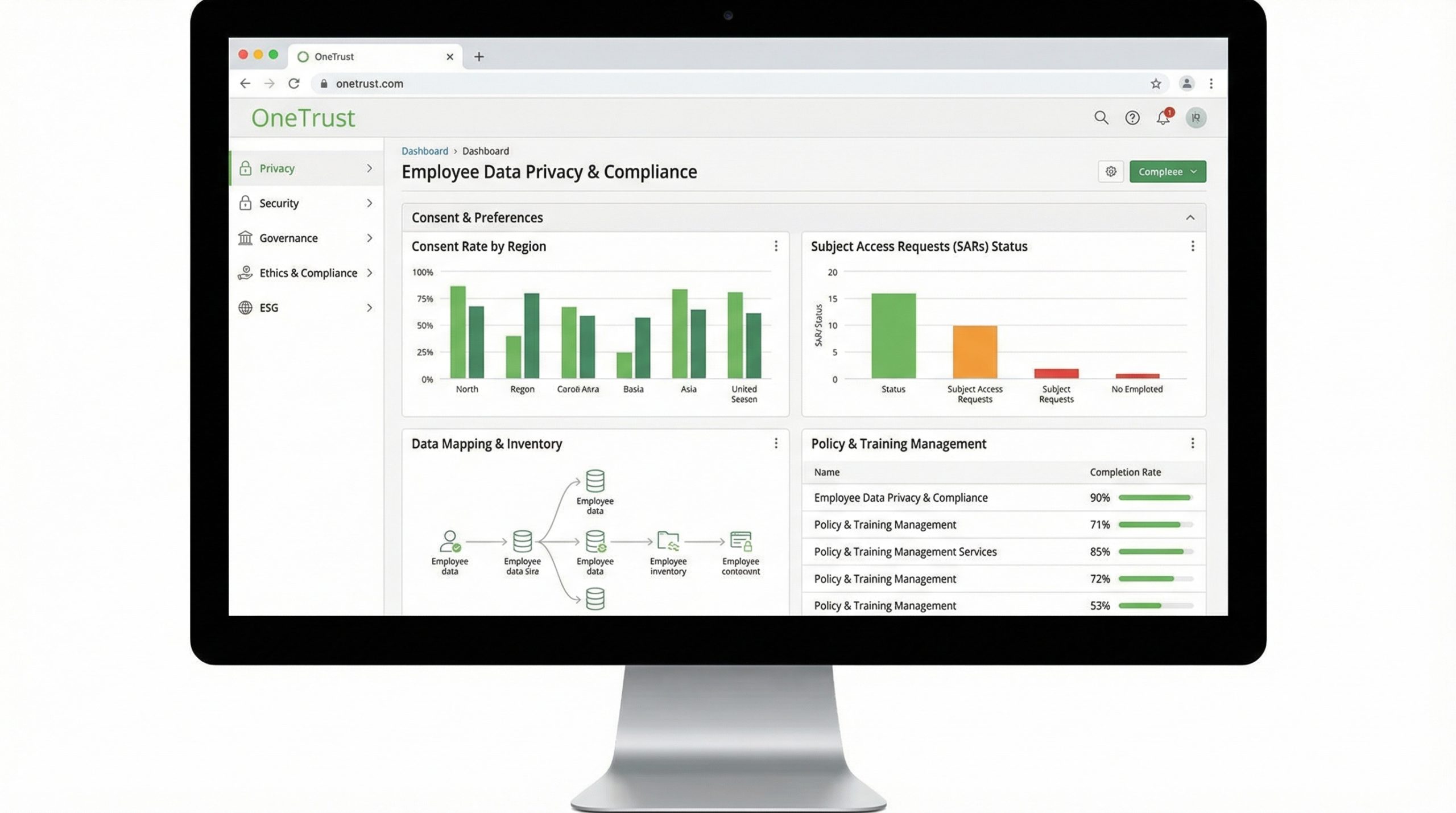
Compliance credentials support every feature. The company holds ISO 27001 for security and ISO 27701 for privacy management. Its vendor-risk module scans third-party contracts for missing data-processing clauses and opens remediation tasks before procurement signs off.
Integrations span the typical HR and IT stack: Workday for HR data, ServiceNow for ticket feeds, and Okta for identity control. Pricing stays modular; you can license only privacy, vendor, or ethics suites and add more as regulations or headcount grow.
For global employers juggling overlapping laws, OneTrust offers a single, AI-guided dashboard that shows exactly where to focus next.
6. KnowBe4 HR – score 80/100
The strongest firewall fails if an employee clicks a fake invoice. KnowBe4 lowers that human risk with AI-tailored phishing drills and just-in-time coaching.
Each user starts with a baseline Phish-prone Percentage (PPP). KnowBe4’s AI builds email lures matched to that person’s role, past mistakes, and regional language. If someone clicks, the platform launches a short lesson that highlights red flags in minutes, not hours.
The results are measurable. The 2025 Industry Benchmarking Report shows the global average PPP falling from 33.1 percent to 4.1 percent after 12 months of training. Dashboards track company, department, and individual scores—a level of evidence auditors and boards value.
Rollout stays simple: sync users from Azure AD or Google Workspace, select a training tier, and go live. The content library covers phishing, social engineering, HIPAA, and privacy basics, letting HR and IT meet several compliance goals.
Pricing ranges from about $15 to $30 per user per year, depending on tier and volume. Preventing a single ransomware incident can offset that cost many times over.
If lower click rates and clear security-awareness ROI matter to you, KnowBe4’s adaptive training platform is worth a closer look.
7. Credo AI – score 79/100
When algorithms screen résumés or rank employees, HR inherits new liabilities. Credo AI audits those models before regulators or plaintiffs step in. The platform connects to the systems behind hiring and promotion, runs bias tests, explains feature importance, and generates audit reports that align with the EU AI Act, New York City’s AEDT law, and the NIST AI Risk Framework.
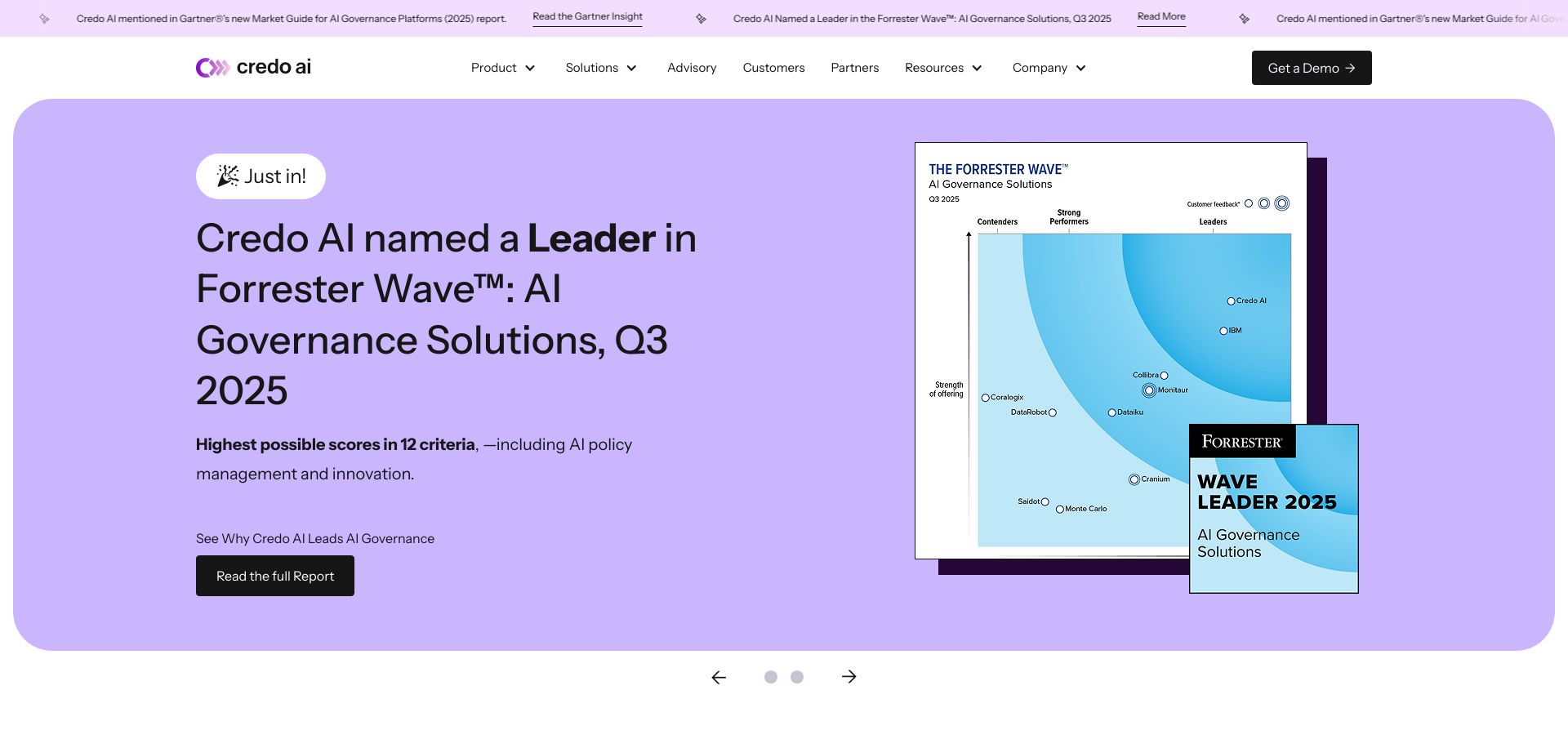
Policy automation sets Credo AI apart. Upload internal rules such as “no age bias” and “log every model change,” and the platform monitors for drift. If a data-science team pushes an unreviewed update, you receive an alert at once.
Data stays on your own cloud. Role-based access lets HR view summary fairness scores while data scientists inspect granular metrics.
Penalties for non-compliant “high-risk” AI can reach €15 million or 3 percent of global revenue under the EU AI Act, so Credo AI’s quote-only enterprise pricing often makes financial sense.
If AI already influences your talent decisions, Credo AI provides a governance layer that keeps innovation moving while auditors stay satisfied.
8. AllVoices – score 77/100
Issues that never reach HR often surface later on Glassdoor or TikTok. AllVoices offers employees a truly anonymous channel to speak up, then uses natural-language processing to surface patterns that deserve leadership attention.
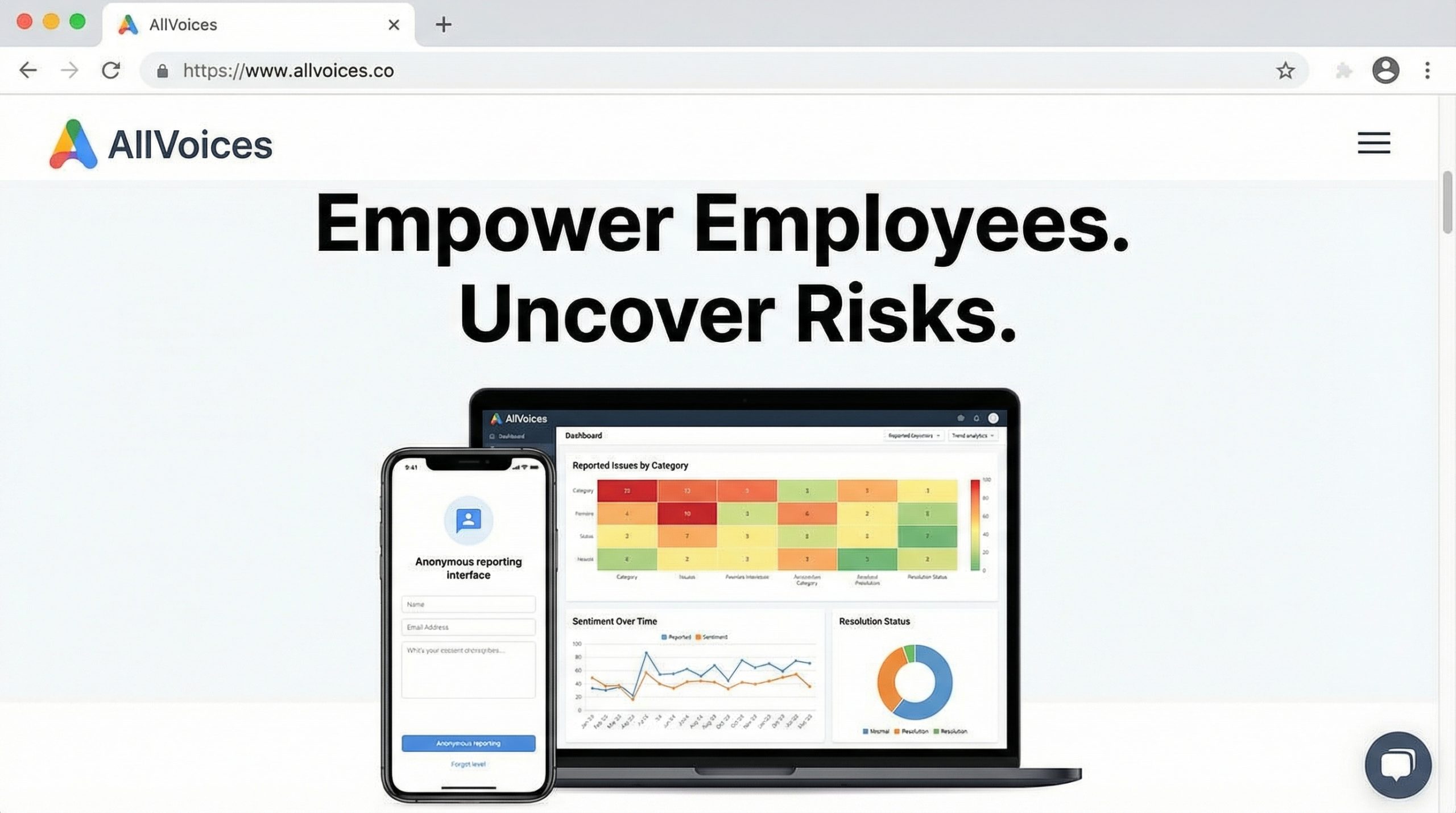
Reports arrive via web, mobile, or Slack. The platform strips metadata, stores messages in an encrypted vault, and assigns each case a unique code so HR can follow up without revealing the reporter’s identity. This design choice lifts participation rates, according to the company’s support documentation.
Once data flows in, AI clusters cases by theme (harassment, burnout, ethics), scores sentiment, and highlights hotspots on a heat map. If one VP’s division shows an uptick in burnout complaints, you will see it long before exit interviews confirm the trend.
Compliance comes built in. AllVoices holds SOC 2 Type II certification and offers guidance to meet the EU Whistleblower Directive, time-stamping every action for an audit trail. Resolved cases can sync back to your HRIS to close the loop.
Pricing follows a SaaS model: a free starter tier for small teams and sliding-scale enterprise packages. For companies worried about silent culture risks, AllVoices delivers an anonymous reporting system with analytics that lets you act early instead of reacting to public fallout.
9. Riskonnect – score 75/100
Riskonnect pulls HR, finance, cyber, and supply-chain risks into a single dashboard. Its machine-learning models parse incident reports, audit findings, and news feeds, calculate likelihood and impact, and place mitigation tasks in a shared workspace.
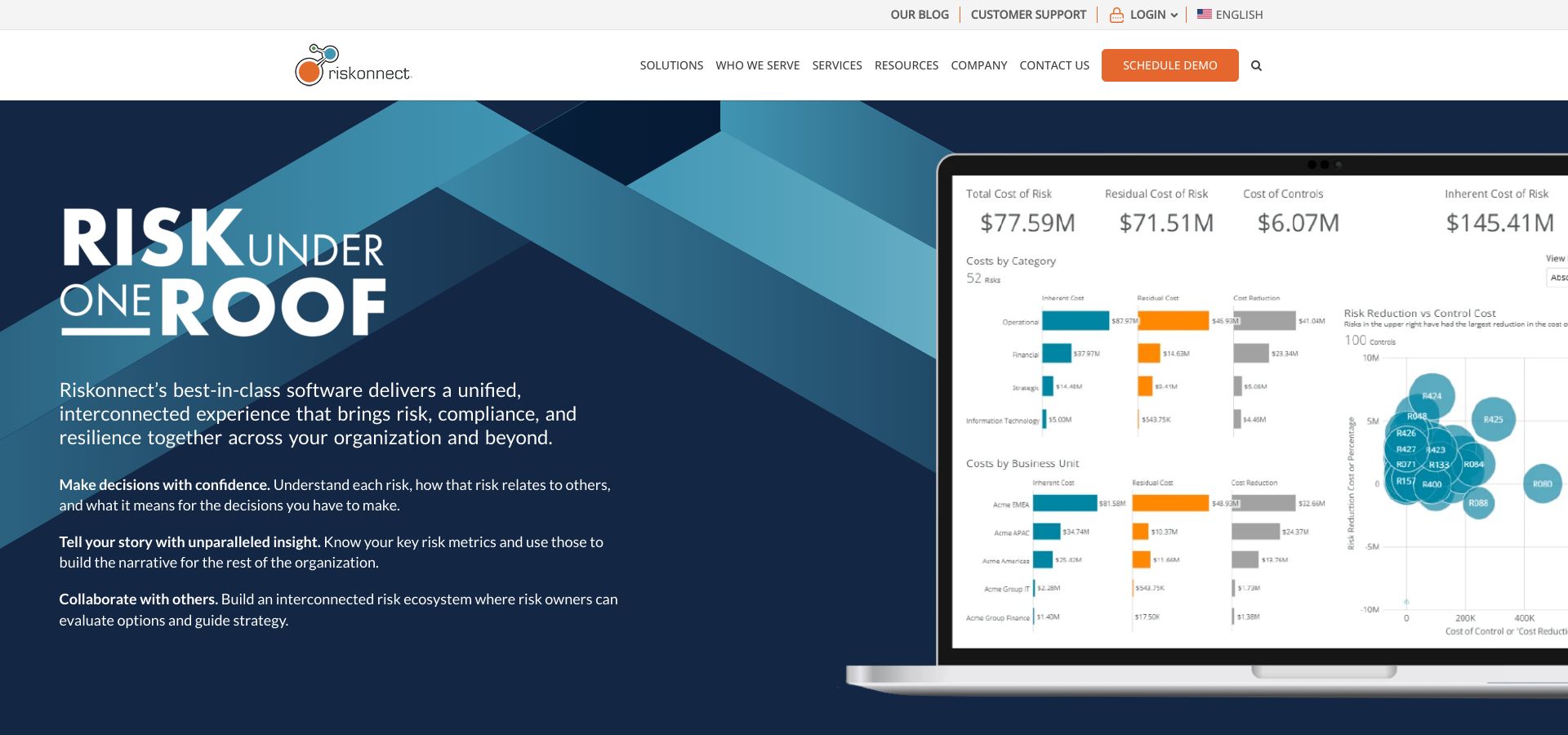
For HR, your compliance calendar sits beside legal and IT schedules, with reminders for harassment-training deadlines or CPRA updates. The same view powers executive reviews, so missed tasks surface quickly.
Implementation takes planning. Riskonnect is an enterprise platform that usually rolls out over 8 to 12 weeks with IT and risk teams involved. The benefit is one repository where every risk, owner, and control lives together.
Pricing matches that scope. The company sells module-based annual contracts and invites prospects to request a quote. Large, regulated organisations that juggle multiple risk tools can retire point solutions and move HR from silo to strategic partner.
If you need a unified view for enterprise and people-related risks—and you have resources for a formal rollout—Riskonnect merits a demo.
How to pick the best tool for your team
A leaderboard score helps, yet the right tool depends on your risk profile. Start by naming the single issue that could cost real money this quarter, such as global compliance, insider fraud, or algorithmic bias. Once the priority is clear, your shortlist shrinks fast.
Next, watch each vendor’s AI in a live demo. Ask to see an alert fire, the audit trail it produces, and the remediation workflow. If a rep cannot show those in real time, keep looking.
Security is non-negotiable. Require ISO 27001 or SOC 2 reports and insist on role-based access; HR data is a prized target for attackers. IBM’s 2024 Cost of a Data Breach report puts the global average breach at $4.88 million, a steep penalty for choosing a weak link.
Integration often matters more than feature count. A sleek interface is useless if it sits outside Workday or your ATS. Push vendors for plug-and-play connectors or a documented API; fewer manual exports mean lower risk.
Finally, weigh total cost of ownership, not sticker price. Add potential fines, legal fees, and productivity losses from manual processes. In many cases, a tool pays for itself by preventing a single incident.
Bottom line: clarify your biggest threat, demand proof of AI performance and security, and run the full TCO math before you buy.
Frequently asked questions
Will an AI risk tool replace our HR or legal team?
No. These platforms act as assistants: they surface anomalies quickly, but humans still decide how to respond and communicate.
Are they only for large enterprises?
Not at all. Checkr’s pay-per-check model and AllVoices’ free tier work for small teams, while Riskonnect and OneTrust suit complex, highly regulated organisations.
How long does implementation take?
Lightweight tools such as KnowBe4 or Checkr can go live in a few days once integrations connect. Enterprise systems that draw from multiple data sources, such as Riskonnect, typically undergo a 8- to 12-week rollout, according to vendor case studies.
What certifications should we insist on?
Begin with SOC 2 or ISO 27001. If you handle EU employee data, add GDPR alignment; if AI influences hiring or promotion, look for readiness against the EU AI Act or New York City’s AEDT audit rule.
Can we measure ROI?
Yes. Track hours saved on manual audits, fines avoided, and incident rates before versus after deployment. IBM’s 2024 Cost of a Data Breach report places the average breach at $4.88 million, so preventing even one major incident can more than cover subscription fees.
Still unsure? Line up two demos, invite your compliance lead, and test each tool with real scenarios. Proof beats promises.
Conclusion
AI’s power cuts both ways. The nine platforms above show how the right tooling can surface hidden threats, slash compliance workloads, and build an audit-ready paper trail long before regulators or plaintiffs come calling. Match their strengths to your biggest vulnerabilities, insist on transparency and security, and you will turn HR risk management from a defensive chore into a strategic advantage.
Guest writer