
We’re long past free pizza and ping-pong perks. Today’s remote teams sign in from spare bedrooms, cafés, and camper vans—they expect support that fits that reality. Paychex surveyed more than 1,000 U.S. employees and found two clear winners: a home-office stipend (31 percent) and fast-internet reimbursement (30 percent).
Guided by that insight, we scored 20-plus perk ideas on employee value, employer cost, retention ROI, trend velocity, and novelty to build one decisive top-12 list. Before we unpack the countdown, a quick note: an internet stipend only works if Wi-Fi reaches every corner. Share these how to eliminate WiFi dead zones tips—which spotlight smart router placement and mesh nodes that bypass thick walls—so your team fixes coverage gaps before filing expense claims.
First up: our methodology.
How we ranked these perks
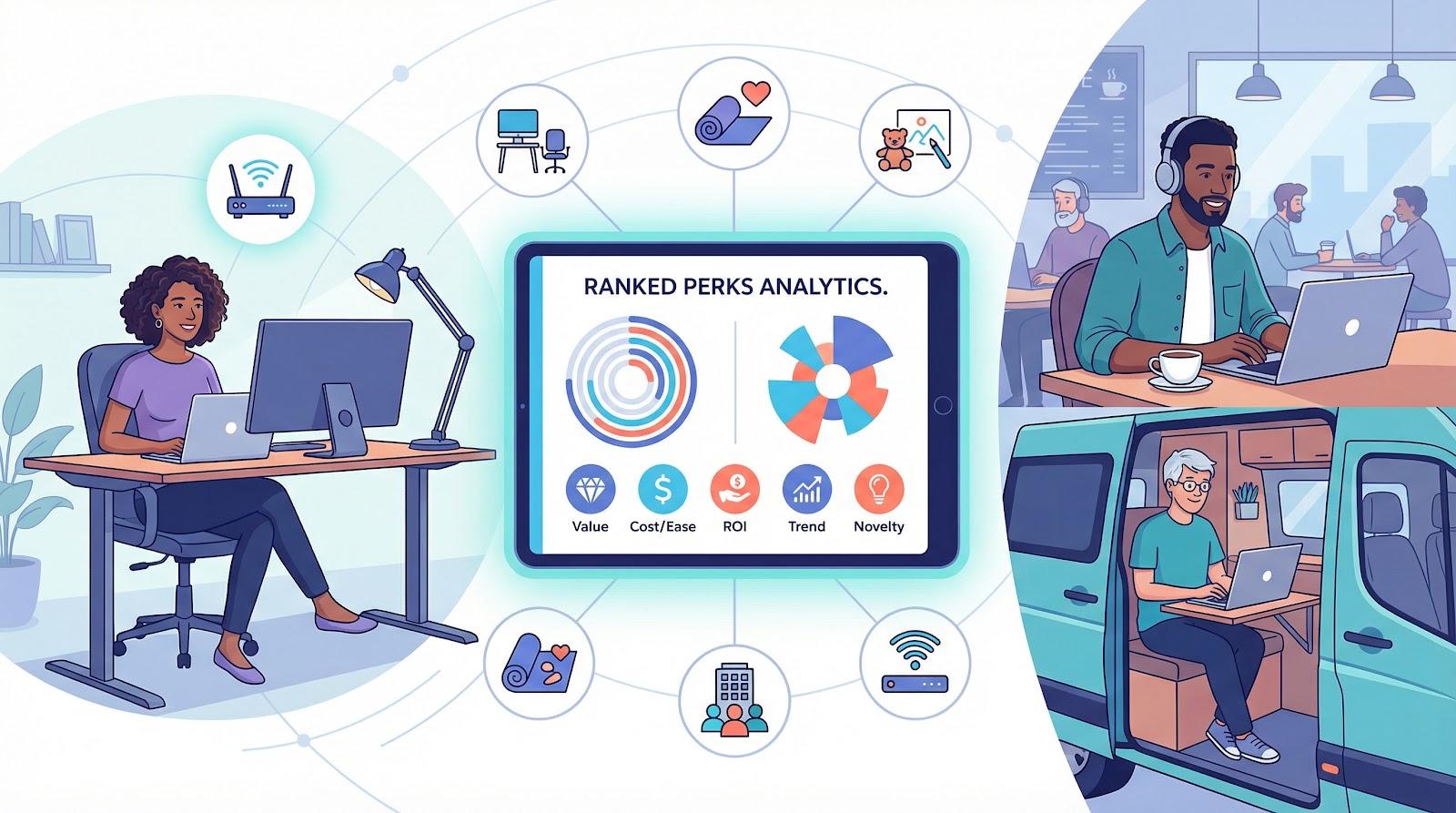
We didn’t throw darts at a whiteboard. We scored every idea on five concrete factors that matter to HR leaders and employees alike: value to the worker, cost and ease for the employer, retention ROI, current adoption trend, and novelty.
Employee voice carried the most weight. When Paychex asked remote staff which extras they crave, home-office funds and internet reimbursements topped the list. We also folded in outcome metrics from broader benefits research. According to CSRWire’s multi-company study, morale climbed for 67 percent of employers after they refreshed remote perks. Real improvements, not optics alone, guided our picks.
One real-world benchmark comes from WOW! Internet’s Fiber 500 plan. The FCC broadband label lists a $60 monthly price with typical speeds of 529 Mbps down and 493 Mbps up—comfortably inside the $50–$75 stipend range many companies budget. Citing concrete figures like those helps HR anchor reimbursement caps to a market price that delivers more than enough bandwidth for simultaneous HD calls, large file syncs, and streaming in the same household.
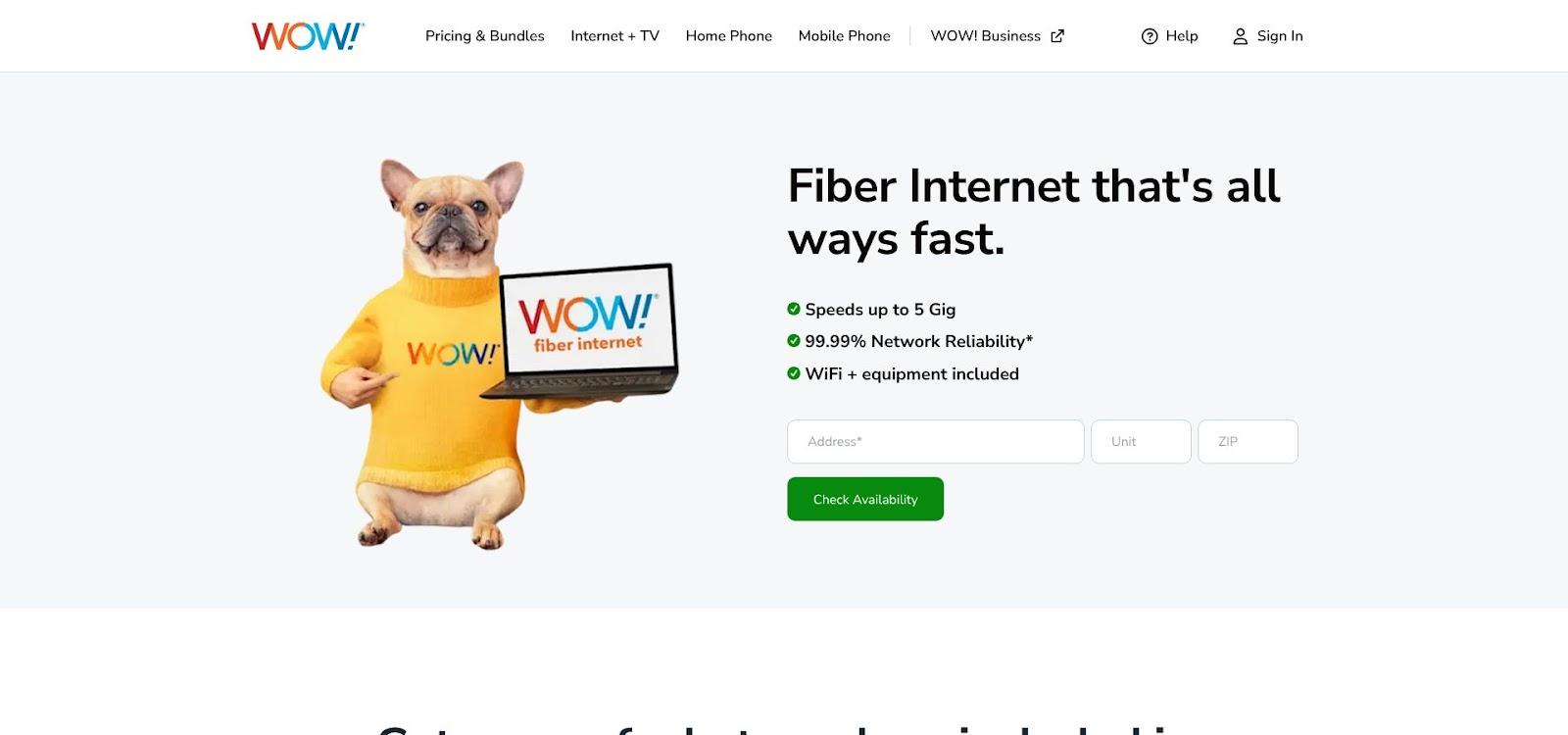
WOW! Fiber 500 FCC broadband label and pricing example screenshot
Each criterion received a 1–5 score, multiplied by its weight. Ties went to the perk with higher employee-value points. Anything scoring below the mid-60s didn’t make the cut (useful, perhaps, but not essential for 2024).
That transparent math is why you’ll see internet and ergonomic gear ahead of flashier options like pet insurance. We’re ranking impact, not whimsy. Now that you know the scoring, let’s start the countdown with perk #12.
12. Remote team bonding and recognition programs
A distributed workforce can’t rely on hallway high-fives or sheet cake. When praise stays silent, motivation slips. Smart HR teams carve out a modest, yet mighty, budget for recognition points, surprise swag, and virtual hangouts.
Start small. Many companies give each employee about $50 in digital kudos credits each month. Teammates hand those points to colleagues who jump on a tough ticket or nail a client demo. Points convert into gift cards, branded gear, or charity donations—whatever resonates. The dollar amount stays low, but the public gratitude feels priceless.
Pair that peer-to-peer engine with periodic “culture drops.” Think snack boxes before a quarterly off-site or a coffee voucher that fuels one-to-one mentoring calls. These touches remind people they belong to something bigger than a Slack avatar.
Recognition perks also surface data. A dashboard shows who sends kudos, who receives them, and where collaboration shines. That insight guides talent reviews far better than sporadic manager notes.
Yes, feel-good gestures sit at #12, not #1. But without a steady beat of appreciation, even the best-funded internet stipend will not keep spirits high. Nail culture credit early, and every other perk on this list lands with more impact.
11. Lifestyle spending accounts: your one-stop perks wallet
Why juggle ten tiny stipends when one flexible fund covers everything? A lifestyle spending account (LSA) lets each employee choose what matters, from Pilates classes to a new monitor, after-school care, or language lessons, all within broad guardrails you set.
Adoption is accelerating. Benepass’s 2025 benchmarking shows 62 percent of small companies already run a broad LSA with a median $1,200 per employee each year, and uptake is similar in mid-size and large firms. That traction signals a shift from perk-by-perk micromanagement to trust-based budgets.
Flexibility also drives engagement. In the same data set, work-from-home funds rank as the third-most popular benefit, offered by 27 percent of companies at a $720 median annual allowance. Employees spend nearly every dollar because they control the menu, not HR.
For a proof point, Dropbox offers a “Perks Allowance” worth up to $7,000 per year that covers wellness, caregiver support, productivity tools, groceries, and more. That generous envelope replaced several siloed programs and trimmed admin overhead.
An LSA isn’t only generous; it is legally simpler. Most items pass through payroll as post-tax income, so you avoid complex receipt matching. Publish a short list of forbidden items, fund the account monthly or quarterly, and let people customize their own best-fit perk stack.
When choice meets accountability, satisfaction rises and surprise invoices disappear—just what a remote-first workforce expects.
10. Annual retreats and in-person meetups
Slack threads keep projects moving, but nothing builds trust like sharing a campfire or whiteboard. Fully remote companies budget at least one company-wide retreat each year, plus smaller squad meetups when budgets allow.

Remote company annual retreat and in-person meetup photo
The payoff shows up fast. Teams leave a four-day off-site with clearer roadmaps, inside jokes, and a renewed sense of purpose. Those intangibles cut through time-zone fog for the rest of the year. Leaders also collect real-time feedback you seldom get in virtual town halls.
Cost matters, so scale events to your head count. A 50-person startup can rent an Airbnb cluster in Colorado for less than a month of downtown office rent. Larger organizations fly everyone to a central hub, as GitLab once did when it gathered 1,300 colleagues in South Africa, then purchase carbon offsets to stay ESG-friendly.
Between all-hands gatherings, sprinkle regional “micro-meetups.” Two engineers want to pair-program for a sprint? Fly them together for three days. Sales and product need alignment? Book a coworking day in a city that splits the travel distance.
Retreats land mid-pack in our ranking because they demand planning and dollars, yet their cultural ROI is hard to match. When people finally shake hands, the next twelve months of video calls feel much warmer.
9. Pet-friendly perks
Cats on keyboards and dogs under desks have become remote-work mascots. When vet bills arrive, though, cuteness does not pay invoices. Offering pet insurance or a small “paw-care” stipend shows you recognize that pets are family, not décor.
The benefit is moving into the mainstream. According to SHRM’s 2023 survey, nearly one in five U.S. employers now subsidizes pet insurance, up from 14 percent the year before. That five-point jump is the largest single-year rise among voluntary benefits, signaling fast-growing demand.
Why the surge? Stress and productivity. Three-quarters of working pet parents say pet health directly affects their work focus, according to a 2025 Wagmo study. Covering routine checkups or emergencies keeps employees at their keyboards instead of the animal ER.
Budget impact stays low. Group pet-insurance plans often cost the company less than ten dollars per employee each month, and participation is voluntary. Some firms sweeten the pot with a one-time $200 adoption bonus or a day of “pawternity” leave for new fur babies. Those touches cost pennies but buy plenty of loyalty.
Pet perks will not matter to every worker, which is why they sit at #9. Yet for the 70-plus percent of U.S. households with an animal companion, they deliver oversized goodwill and a calmer Zoom call when Fido feels fine.
8. Meal stipends and food delivery
No one wants to watch office colleagues post the catered taco bar while they microwave leftovers at home. A small, predictable food allowance evens the field and sparks goodwill each lunchtime.
The happiness boost is real. EzCater found that 57 percent of employees value free or subsidized food more than any other perk, and 94 percent agree that a proper lunch break lifts their performance. When the stipend covers DoorDash, groceries, or a meal-kit box, remote staff step away from screens and recharge.
Implementation is simple. Many firms drop $15 every Friday onto a prepaid card, while others issue a monthly “Lunch on Us” credit of $60–$100. Because spending is frequent and receipts pile up, most route the perk through a vendor that automates tax gross-ups.
Keep equity in mind. If headquarters still offers free snacks, matching value for remote teammates avoids the “second-class citizen” vibe that pops up in Ask a Manager letters. A flat stipend feels fairer than a corporate delivery account, which can penalize workers in rural ZIP codes with high fees.
Food perks will not single-handedly solve engagement, but they punch above their cost. A hot lunch or surprise snack box reminds people you see the whole human, not just the avatar on mute.
7. Childcare and family support
Remote work offers parents flexibility, yet the toddler climbing into every Zoom frame proves schedules still collide. A monthly childcare stipend or backup-care partnership turns chaos into calm and keeps experienced talent on your payroll.

The numbers tell a retention story. A 2023 report from KinderCare found that 69 percent of working parents had switched jobs—or would consider switching—because of childcare concerns. Employers that fund care see easier hiring and lower turnover, especially among mid-career women.
Execution spans price points. Microsoft reimburses up to 160 hours of emergency care per year, while many startups simply transfer $300 each month into a dependent-care FSA. Either route offsets daycare costs that now rival in-state college tuition in several states.
Fairness matters. Employees without kids sometimes bristle if the company pays for nannies but not other life needs. Pairing a targeted childcare stipend with a broader lifestyle account (see #11) solves the optics problem: parents use funds for care, and others direct them elsewhere.
If budget only covers policy tweaks, extend paid family leave or allow split-shift schedules so caregivers can handle school runs. Those zero-cost moves still pay dividends: 90 percent of working parents say they would be more likely to stay if offered employer-sponsored child care, according to Bright Horizons.
Investing in family support is not charity; it is workforce stability. When parents know their children are safe, their focus and loyalty stay with you.
6. Flexible schedules and time off
Clock punching never fit knowledge work, and remote life makes rigid hours feel outdated. Give people control over when they work, and engagement rises.
Forbes reports that 95 percent of employees say hybrid or remote flexibility is the top driver of mental health. When work wraps around school runs, elder-care appointments, or a midday workout, stress falls and output climbs.
Many companies go further by capping the week at four days. The United Kingdom’s six-month pilot showed that 91 percent of firms kept the shorter week because productivity held steady or improved while burnout plunged. Bolt, Exos, and dozens more now run “you-do-you Fridays” or full 32-hour schedules.
Unlimited paid time off often follows, but guardrails matter. Set a cultural floor (two full weeks at minimum), and ask leaders to model real vacations so people log off.
Implementation costs little; you mainly update policies and coach managers to measure results, not chair time. The payoff appears in lower attrition and a talent pipeline that spans time zones.
Freedom to choose when to focus and when to rest is foundational. Nail this benefit, and every other perk on the list delivers bigger returns because employees have the breathing room to enjoy them.
5. Coworking space membership
Home offices double as nurseries, kitchens, and sometimes construction zones. A stipend for a local coworking desk gives employees an escape hatch, restoring the deep-work focus many lost when the kitchen table became a cubicle.
Demand is climbing again. Benepass found coworking funds ranked among the top three uses of work-from-home stipends in 2025, as rising utility bills and household distractions push people to seek professional space close to home. Basecamp sets the pace, covering up to $200 a month so staff can drop into any shared office they like, from WeWork to the indie spot above a bakery.
Benefits reach beyond productivity. A gentle hum of background chatter satisfies extroverts, while reliable printers, phone booths, and espresso machines beat most spare-bedroom setups. For employers, the math is friendly: paying $150–$300 per person each month still costs less than leasing regional offices.
Two implementation tips:
- Offer a flexible allowance rather than a corporate membership in one chain. Your engineer in Boise probably doesn’t have a WeWork down the street.
- Treat the perk as a reimbursable business expense, not a flat cash bonus, so it remains tax-free and compliant in reimbursement-mandate states.
A coworking stipend will not suit everyone, yet for those craving a professional environment one or two days a week, it transforms kitchen-table chaos into sustained, heads-down momentum.
4. Professional development stipends
Career growth can stall when hallway mentoring disappears. An annual learning budget (often $1,000–$2,000) puts progression back in employees’ hands.
LinkedIn’s Workplace Learning Report found that 94 percent of workers would stay longer at a company that invests in their education. When you cover a Coursera certificate, a local conference, or an online public-speaking class, you signal future-focused commitment and trim flight risk.
Adoption keeps rising in remote-heavy sectors. Automattic, GitLab, and many high-growth startups preload expense cards with learning credits each January. They then ask staff to share takeaways in a quick Lunch & Learn, multiplying knowledge across teams.
To drive utilization:
- Pin the stipend to a deadline; unused funds expire each December, nudging action.
- Tie requests to broad skill goals rather than rigid course lists; trust your people to choose what lifts their game.
- Track redemption rates. If half the team leaves money untouched, survey for blockers such as time, awareness, or relevance, and remove them.
Skills fade fast in tech-driven markets. A modest, flexible upskilling pot keeps talent sharp and reminds employees they don’t need to quit to grow.
3. Wellness and mental-health stipends
Remote work blurs the line between sofa and sprint planning. A monthly wellness credit, often $50–$100, helps employees protect their bodies and minds before stress turns into sick leave.
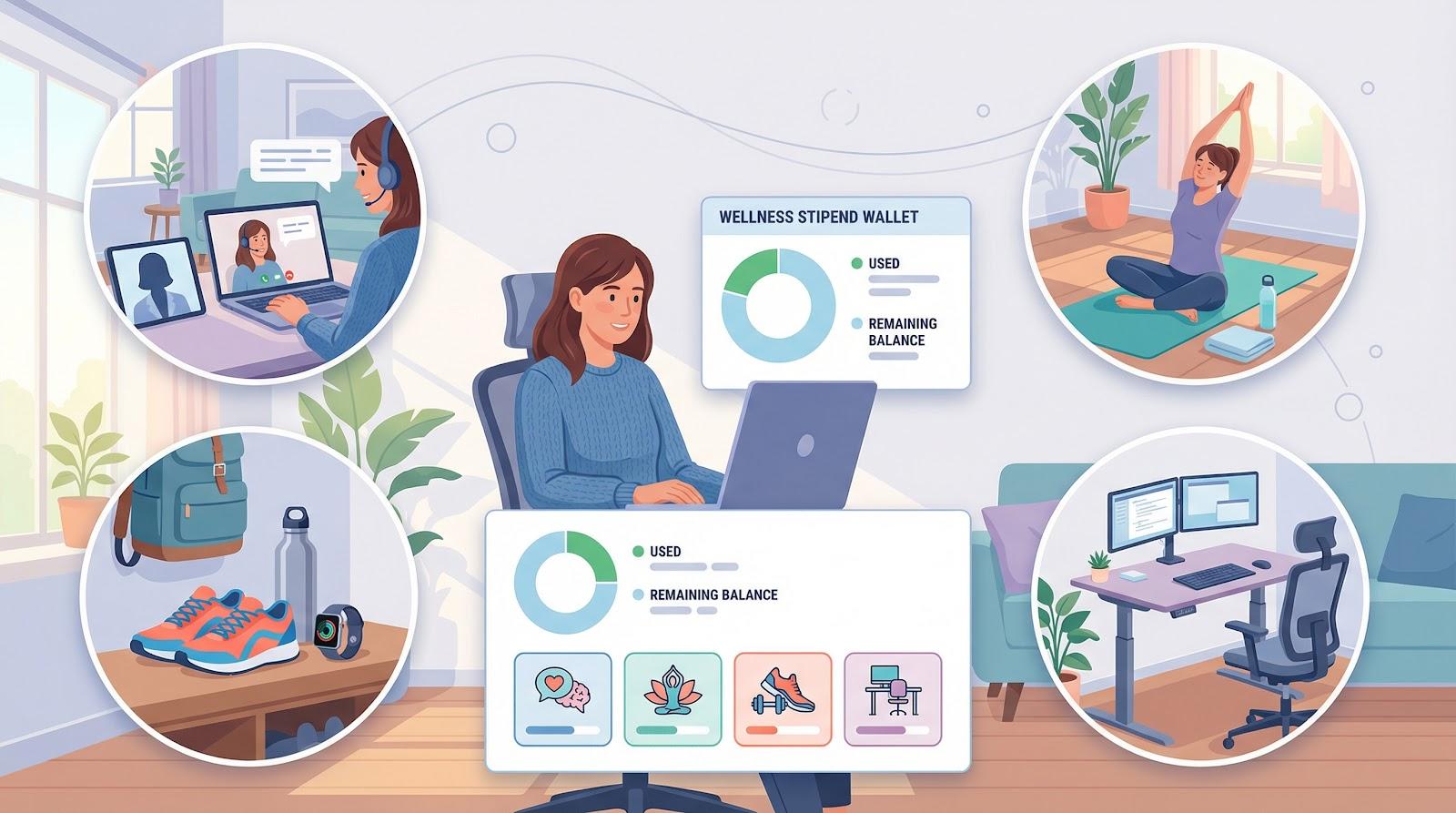
In CSRWire’s 2024 pulse survey, 88 percent of mid-sized employers fund some form of wellness benefit, and two-thirds reported a measurable morale bump after launch. Employees bought meditation apps, therapy sessions, standing-desk converters, and running shoes—whatever kept them balanced.
Flexibility is the secret. Rather than dictating “everyone gets a Calm subscription,” give people a budget and a broad eligible list. One teammate might book virtual yoga, another covers co-pay gaps for counseling. Usage patterns then inform future program tweaks.
For compliance, treat the perk as taxable income unless you reimburse receipts under an accountable plan. Many firms choose the simple, taxable route and gross-up by 25 percent so take-home value stays intact.
Burnout costs companies an estimated $5,000 per employee in lost productivity each year, according to Mental Health America. A humble stipend that funds a weekly therapy hour pays for itself long before Q4 crunch arrives.
Healthy employees log in energized; they stay longer, too. That alone justifies placing wellness solidly in our top three.
2. Home-office setup budget
A wobbly chair and a laptop-only screen strain morale—and backs—faster than any micromanaging boss. A one-time or recurring stipend for proper gear turns a spare corner into a real workstation and pays off in comfort, speed, and retention.
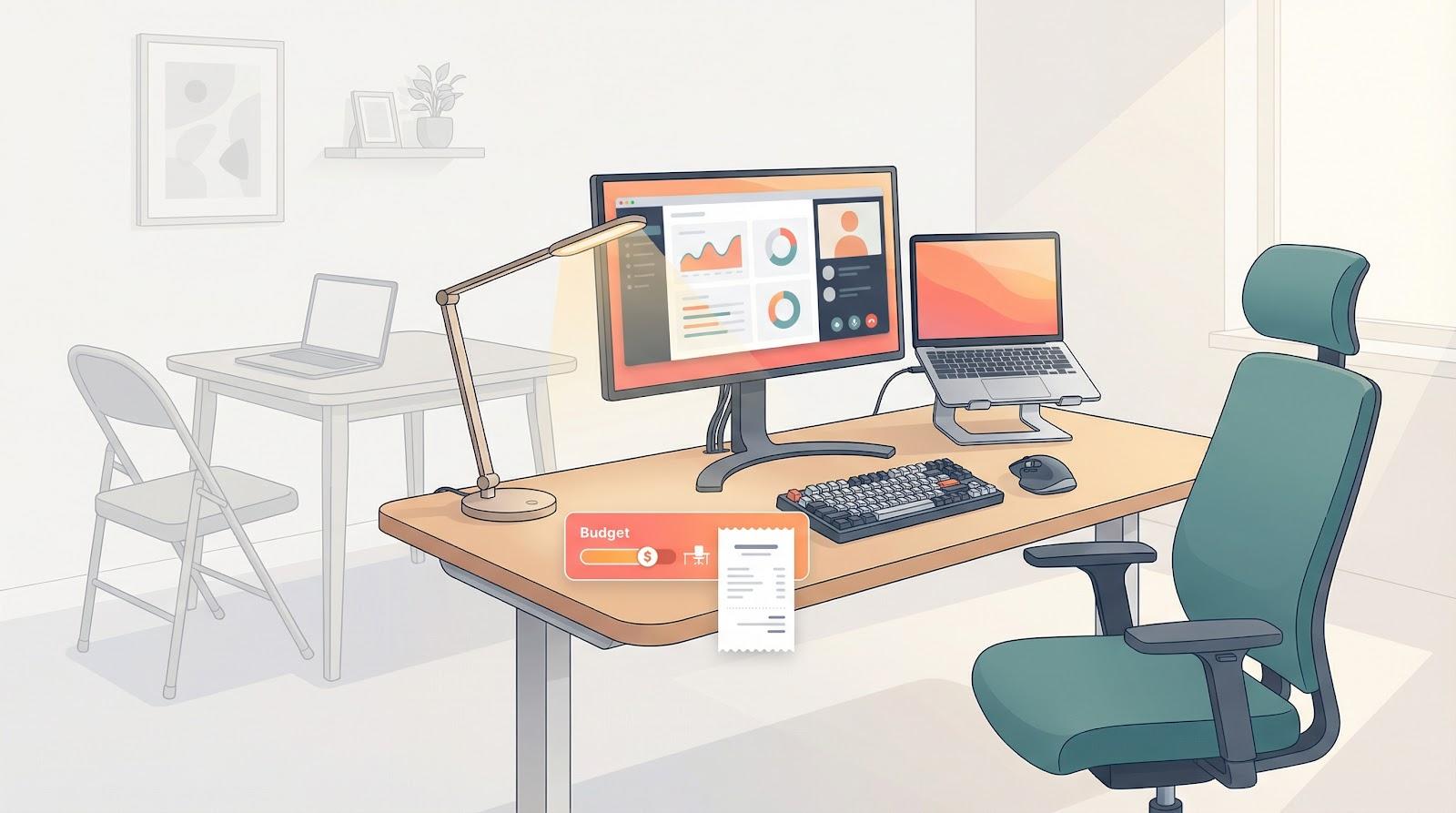
The trend is now mainstream. Benepass’s latest benchmarking shows 62 percent of U.S. employers fund a work-from-home setup, with the average allowance landing around $891. That share sat below 25 percent before 2020, signaling how quickly companies have accepted the link between good equipment and good output.
What the money covers is flexible. Most programs list essentials first—desk, ergonomic chair, monitor, webcam—then leave room for extras such as task lighting or an anti-fatigue mat. Many firms refresh the pot every two to three years so gear stays current and safe.
Implementation tips:
- Issue funds as reimbursable expenses tied to receipts. That keeps the benefit non-taxable and compliant with states such as California that require reimbursement of necessary work costs.
- Publish a short “approved items” guide with price caps, for example, chairs up to $600, to curb splurges without limiting choice.
- Track utilization. Low uptake often means new hires don’t realize they can upgrade; a quarterly Slack reminder fixes that.
When employees sit in a supportive chair, view code on a 27-inch screen, and type on a keyboard that doesn’t cramp wrists, they deliver better work—and remember who made that possible.
1. High-speed internet stipend
Nothing torpedoes a client demo faster than a frozen screen. Covering part or all of an employee’s home internet bill keeps meetings smooth and productivity high.
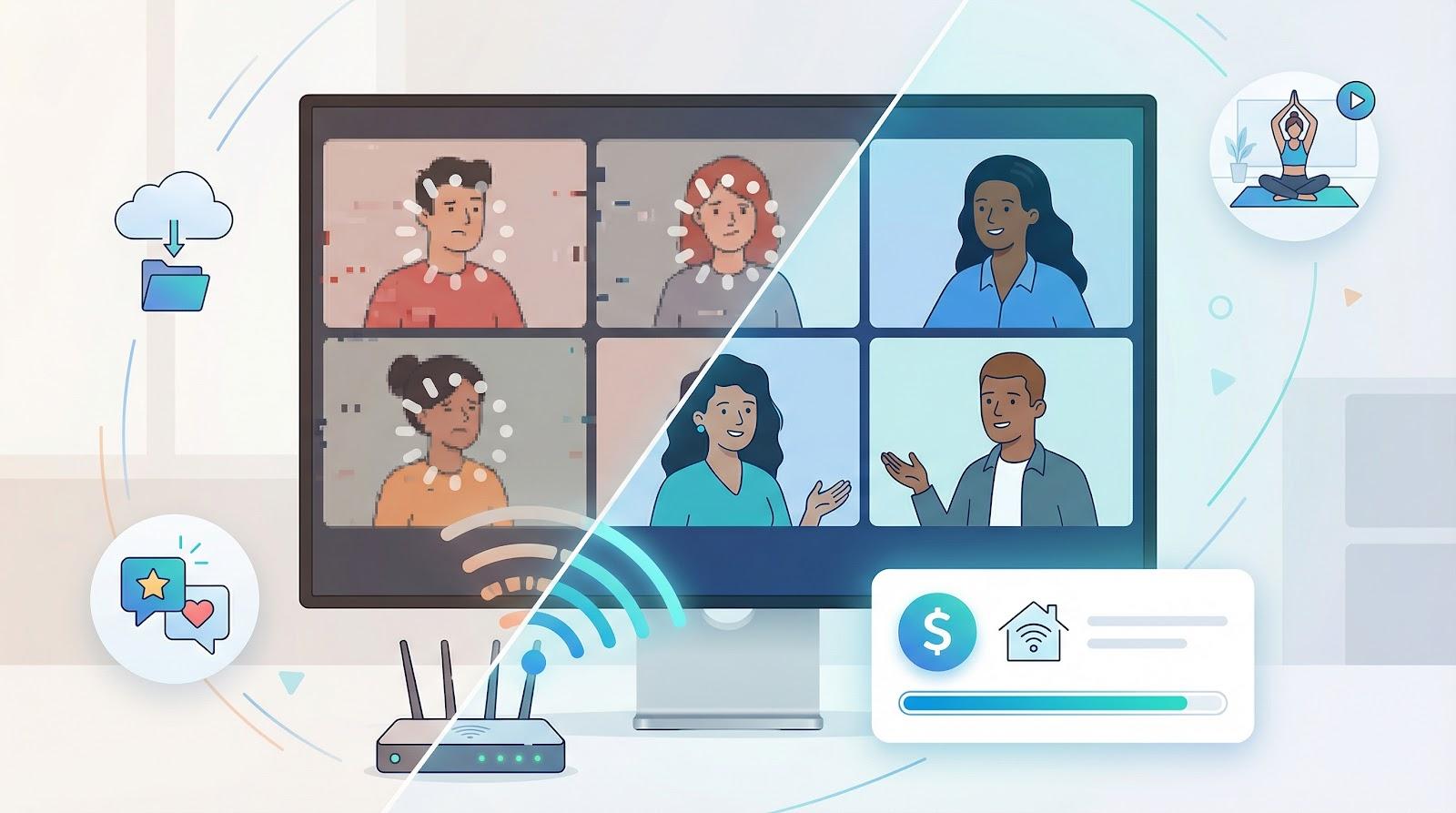
The data backs it up. In the same Paychex survey that crowned home-office gear, 30 percent of remote employees named fast, reliable internet as their top need. A separate Ookla report shows that every 10 Mbps boost in download speed improves video-call stability by roughly six percent.
Implementation is straightforward:
- Reimburse a fixed dollar amount (often $50–$75 a month) or the full cost of the upgrade tier, whichever is lower.
- Require a copy of the monthly bill to keep the payment non-taxable under accountable-plan rules.
- Encourage fiber or cable plans with at least 200 Mbps down and 20 Mbps up—the sweet spot for HD streaming and large file sync.
Most programs renew automatically; employees simply confirm the plan once a year. The cost is minor compared with the hours lost to lag and rescheduled calls.
Reliable bandwidth underpins every other perk on this list. When screens don’t freeze and voices stay clear, recognition apps, virtual yoga sessions, and four-day weeks all work as intended.
Guest writer