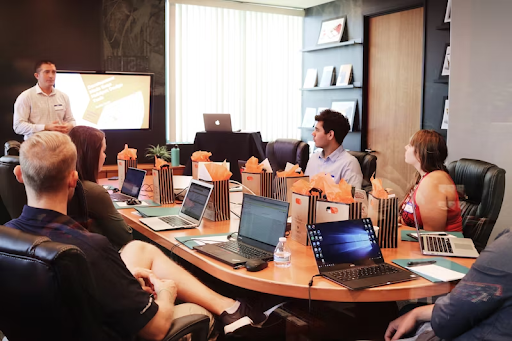

Let’s be honest: we’ve all sat in that one meeting. The one where the room is packed with “heavy hitters” – the top sales person, the most brilliant engineer, and a project manager with a flawless track record. On paper, it’s a “Dream Team.” In reality, it’s a train wreck. The egos are clashing, the communication is non-existent, and the project is stalling while everyone argues over who has the better idea.
For years, we’ve been told that if you just hire the “best” talent, the rest will take care of itself. But as the South African business landscape becomes faster and more unforgiving, we’re learning that the cost of a dysfunctional team is a luxury no one can afford. It’s time to stop building teams based on a “gut feel” about who might get along and start looking at the Behavioural DNA that actually makes collaboration work.
The Myth of the “A-Player”
We often treat recruitment like a game of collecting trading cards. We look for the highest stats – the best degree, the most years of experience, the biggest previous titles. But Human Resources has traditionally been viewed as a “soft” function, governed by intuition and that elusive, subjective thing we call “culture fit”.
The problem is that our intuition is riddled with holes. When we rely on our instincts to build a team, we fall into the “intuition gap”. We succumb to affinity bias, where we subconsciously pick people who think and act just like us, or the halo effect, where we’re so dazzled by someone’s technical brilliance that we ignore the fact that they have the emotional intelligence of a teaspoon.
In a high-stakes environment, these biases don’t just cause “personality clashes”; they lead to expensive, systemic failures. Skill is what gets someone an interview; behaviour is what determines if the team actually wins.
The Pillars of Team Architecture
To move from being “people people” to becoming true data architects, we have to look deeper than the resume. We need to understand the underlying mechanics of how people interact. This is where evidence-based HR turns from a reactive administrative task into a predictive powerhouse.
Building a resilient team requires three scientific pillars:
- Psychometric Insights: Rather than guessing if a group will have the “grit” to survive a crisis, psychometrics provide a validated map of their behavioural drivers. It’s about balance. If a team is 100% “drivers” and 0% “implementers,” you’ll have a lot of vision but zero execution.
- Learning Agility Data: In the middle of the age of AI, what your team knows today matters less than how fast they can learn tomorrow. Measuring learning agility helps you identify who can pivot when the market shifts and who will help pull the rest of the team through the change.
- People Analytics: By looking at data across the board, leaders can spot patterns in engagement and turnover before they become a crisis. It allows for “prescriptive” HR – fixing the engine while the car is still moving, rather than waiting for a mass exodus of talent.
Escaping the “High Performer” Trap
One of the most common mistakes in South African boardrooms is promoting someone solely because they are great at their job. This is the High Performer Trap. We assume that because someone is a brilliant individual contributor, they will naturally be a brilliant collaborator or leader.
But performance (what they’ve done) and potential (what they are capable of doing in a group) are two very different things. By using objective behavioural data, we can distinguish between the two. This ensures your leadership pipeline is built on actual capability, not just seniority or who’s been around the longest.
The Bottom Line: Speaking the Language of the C-Suite
When you start using data to build teams, the conversation with the board changes. You’re no longer asking for a budget for “team building” retreats; you’re proving ROI.
The business case is simple:
- Reduced Turnover: People stay where they feel they “fit” behaviourally.
- Faster Productivity: Teams with complementary behaviours skip the “awkward phase” and hit the ground running.
- Risk Mitigation: You identify the potential “derailers” and skill gaps before they cost you a client or a reputation.
Seeing People More Clearly
At the end of the day, evidence-based HR isn’t about turning people into numbers or removing the “human” from Human Resources. It’s the exact opposite. It’s about using data to strip away our own biases so we can see people for who they truly are.
At Lumenii, we believe that when you have the right data, the right decisions follow naturally. Collaboration isn’t a mystery, and it shouldn’t be a gamble. When you understand the behavioural DNA of your team, you don’t just build a group of coworkers – you build a powerhouse.